Alabama’s Black Belt Community Foundation prepares to welcome new leadership

The Black Belt Community Foundation has announced that founding CEO and President Felecia Lucky plans to step down from her role, effective Sept. 30. The foundation’s board has unanimously appointed Black Belt native Christopher Spencer, the foundation’s current chief community engagement officer, to lead the organization.
“It has been the honor of a lifetime to serve BBCF and the Black Belt,” said Lucky, who’s leaving to become president and CEO at the F.B. Heron Foundation. “Together, we’ve built something special.”
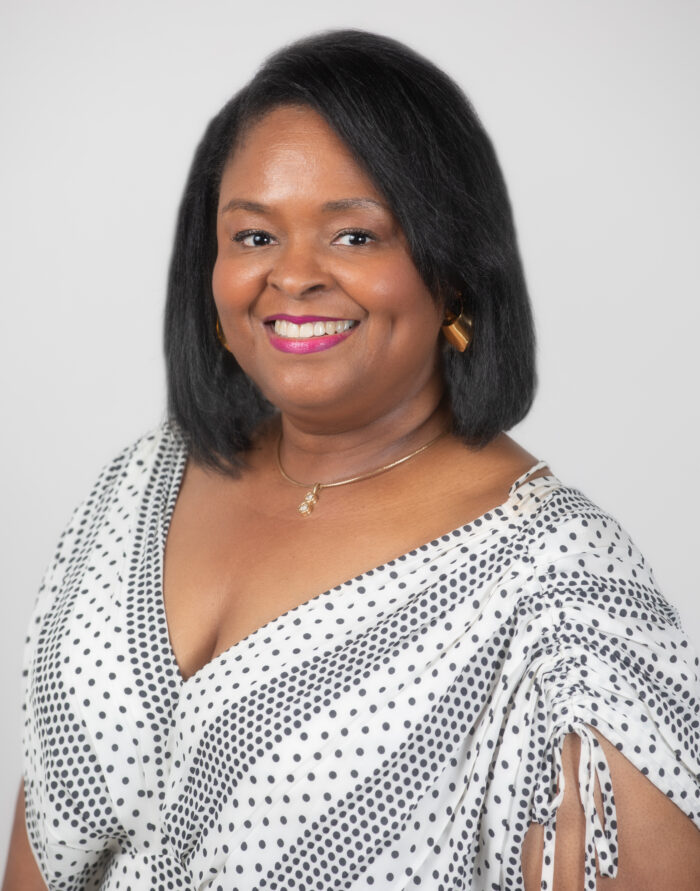
Felecia Lucky, who has led the Black Belt Community Foundation throughout its entire 21-year history, is leaving to become president and CEO at the F.B. Heron Foundation. (contributed)
Reflecting on 21 years of service
Lucky has led the BBCF throughout its entire 21-year history.
“The one thing that I’m the proudest of is that we are still here,” Lucky told Alabama News Center when reflecting on her more than two decades at the foundation. “There are so many organizations that started far less than 21 years ago who didn’t make it this far. So I’m grateful that we’re still here and we’re still doing impactful work. I love the fact that our mission has not changed.”
Founded in 2004, the mission of the Black Belt Community Foundation is to “forge a collective stream of giving from the community and other sources so we, the people of the Black Belt, can enhance our continuing efforts to lift ourselves by ’taking what we have to make what we need.’”
Based in historic Selma, Alabama, the BBCF serves 12 counties — Bullock, Choctaw, Dallas, Greene, Hale, Lowndes, Macon, Marengo, Perry, Pickens, Sumter and Wilcox – a combined population of approximately 184,000 people.
During Lucky’s tenure, the BBCF moved nearly $100 million into the Black Belt through partnerships with more than 200 regional nonprofit organizations. For the past eight years, the BBCF also has managed the region’s Head Start program, providing services to 307 children across Choctaw, Dallas, Marengo and Wilcox counties.
But Lucky said much of the foundation’s success is thanks to the Community Associates program.
“Our board members came up with the idea of having community volunteers in each of the counties that we served, and that was ingenious because what it allowed us to do, at a time when organized philanthropy was unheard of around the region, was to be able to go and work with folks and talk through what philanthropy could look like in the Black Belt,” Lucky said. “This group of folks later became known as our Community Associates.”
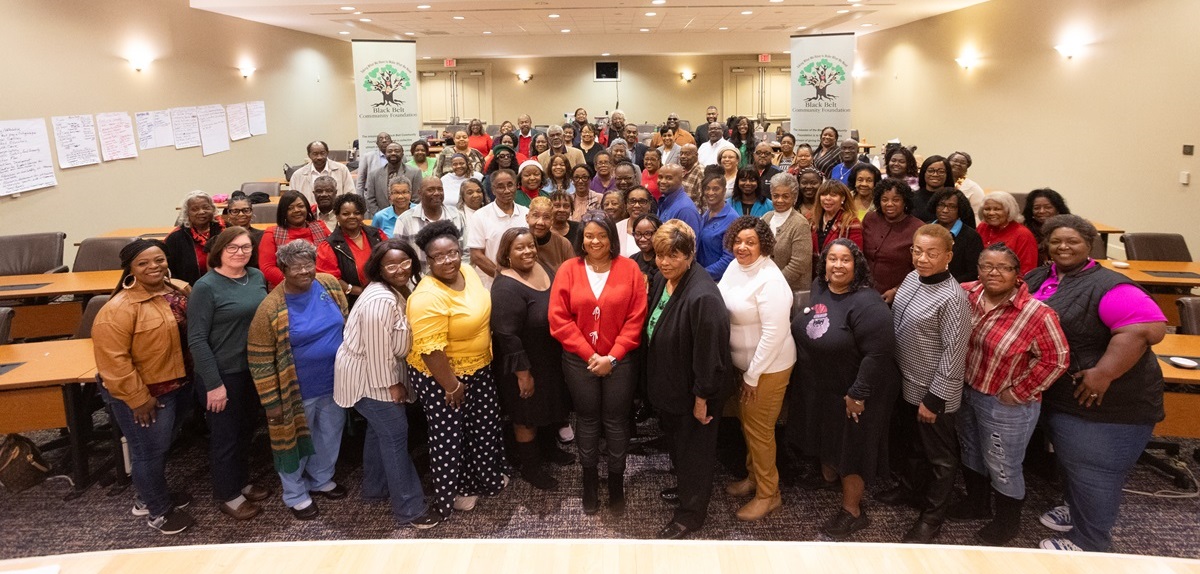
The Black Belt Community Foundation’s Community Associates, gathered here for their annual retreat, are a group of volunteers who not only serve in the region but also help guide and support the work of the foundation. (contributed)
After starting with five community volunteers in each county, the foundation now boasts 160 community associates. These dedicated volunteers not only step in where help is needed most, but their on-the-ground efforts also provide the foundation with valuable insights into the evolving needs of each community.
BBCF is an official census-taking organization for the Black Belt region, and the area was commended by Gov. Kay Ivey for the residents’ record-breaking response rate, a response made possible in part by the community associates. The volunteers also urge residents to participate in studies and surveys that will help shed light on the region’s needs related to health equity, criminal justice reform and more.
“It’s those volunteers, to me, who make all the magic at the Black Belt Community Foundation happen,” Lucky said. “I know it is what has allowed me to lead with boldness.”
Alabama Power and the BBCF
Alabama Power and the Alabama Power Foundation have been proud supporters of the BBCF since its inception. Julian Smith, a Dallas County native and former Vice President of Governmental Affairs for Alabama Power, played a pivotal role as a founding board member of the BBCF and was deeply committed to its success.
In 2020, in the face of the COVID-19 pandemic, the Alabama Power Foundation joined the BBCF, Hope Credit Union and other partners to create a program that provided cities and counties across the Black Belt immediate access to capital that could be used to respond to COVID-19-related needs.
“Alabama Power has been a consistent partner for the entirety of our existence,” Lucky stated in a previous interview, “and has shown commitment to making an impact and difference in the Black Belt.”
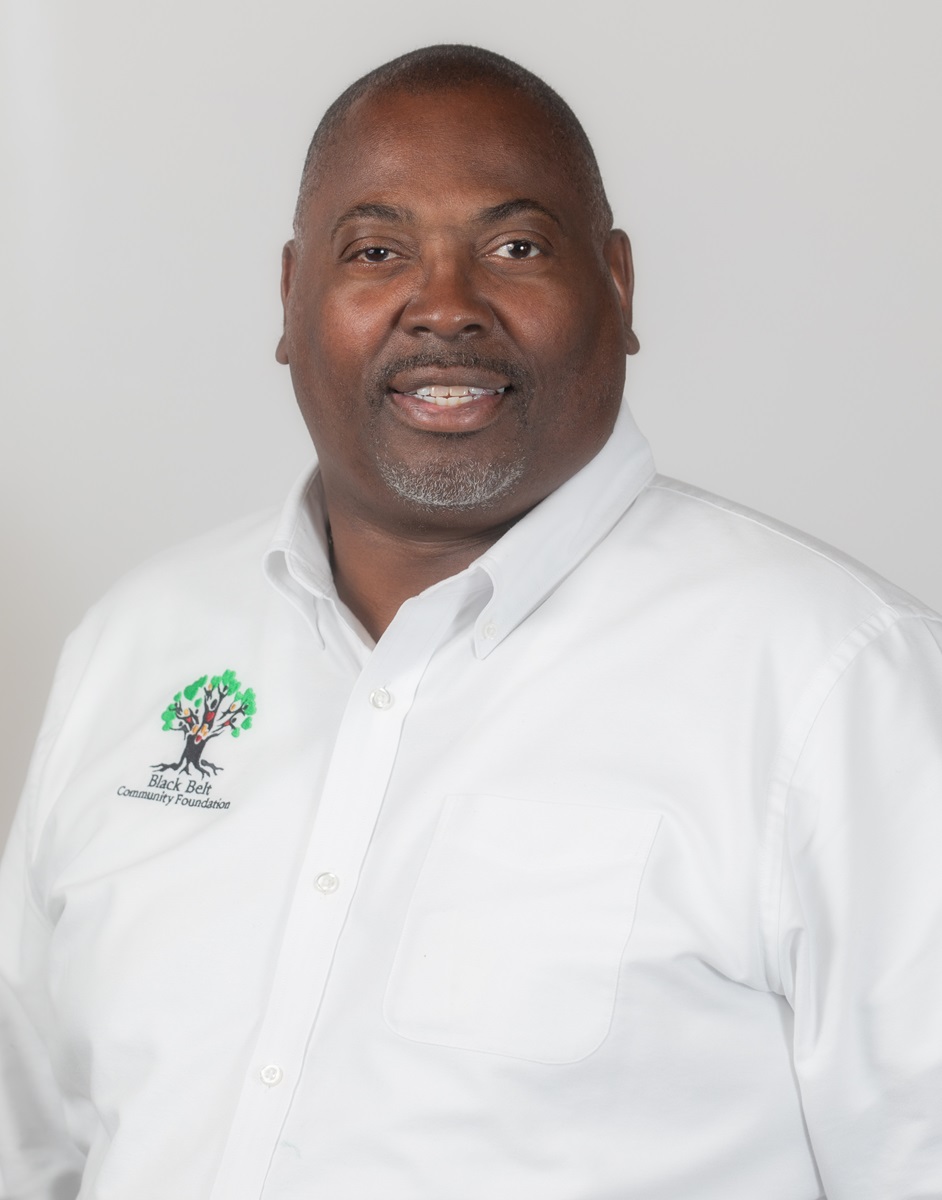
The Black Belt Community Foundation Board unanimously appointed Christopher Spencer as the Foundation’s new CEO and president. (contributed)
Looking ahead
Spencer, a native of Bellamy, began working with the BBCF more than 20 years ago as a Community Associate. Before joining BBCF, he worked at the Sumter County Board of Education and as director for resource development for community engagement at the University of Alabama. Spencer, who’s also pastor of the St. Matthew-Watson Missionary Baptist Church of Boligee, previously served as vice chairman of the Sumter County Commission and was recently appointed by Gov. Ivey as a trustee for Alabama State University. His time as an Army officer during Operation Desert Storm garnered him the prestigious Gen. Douglas MacArthur Leadership Award.
Spencer will assume his new role on Oct. 1. One of the many things he’s doing to prepare is staying abreast of what the Black Belt community says it needs most. The BBCF recently completed a listening session tour of all 12 counties, which revealed and reiterated issues such as the need for more hospitals, affordable housing and broadband internet.
“We can’t sit in Selma, and other places in the world, and tell people in Sumter County or Greene County what they ought to do to fix their problems,” Spencer said, underlining the need for listening sessions and the Community Associates program.
Spencer’s vision for his time at the helm of BBCF is simply to do more.
“When you look at our community development and community grants program, we want to make that larger so that we can impact more people,” he said. “The vision is to use the data that we are receiving from the community to work closely with our board and staff and our Community Associates and other consultants to put together a good investment plan, and to invest in and grow and build to make it a better Black Belt.”
Spencer stressed that he wants to transform the Black Belt so that the region’s talented young people will want to stay in the area and so that those who have left will be encouraged to return. And he believes the BBCF can help make that happen.
“The strength of this organization is its people. I don’t know of another community foundation that works the way we work — guided by the voice of the people in our community,” Spencer said. “Felecia and our board have built and nurtured this culture. As I move into this role, we’re going to continue to nurture the seed that’s been planted so we can continue to support and empower the Black Belt.”