Coastal conservation effort is saving much more than Alabama’s beaches

Alabama is home to many of the most beautiful bodies of water in the Southeast. Alabamians have the privilege of enjoying incredible, fresh catches from the Gulf and the opportunity to retreat to the South’s most stunning beaches. But what happens when these priceless local luxuries are threatened? We had the chance to speak with Jason Kudulis, deputy director of the Mobile Bay National Estuary Program, to find out more about coastal conservation efforts.
“In coastal Alabama, we are challenged by a changing landscape,” he says. Kudulis speaks to the careful balance that must be struck in order to maintain the beloved landscapes in places like Baldwin County. “Baldwin County has been the fastest-growing county in the state consistently for some time. … So, you have these pressures of development and converting natural landscapes into hardened structures, and with that, you have increased stormwater runoff.”
Stormwater runoff is an element of which importance in the context of conservation may be underestimated. Kudulis outlines the issue in simple terms: “Everything that falls from the sky and hits the surface that’s not able to recharge the groundwater percolates into those natural features and becomes stormwater runoff.” While this has been an ever-present issue, recent weather events have exacerbated the problem significantly.
Kudulis points to one recent record rainfall as a prime example. “It was a 500-year storm event where 12 inches of rain fell in three to four hours. When all that rainwater collects, it actually picks up volume and velocity because it has nowhere to go but hit those drainages,” he says. “When that happens, you have the degradation of water quality as a result of those pollutants being picked up as the stormwater runoff is going. More specifically, it’s the sediment. Sediment is the number one pollutant of water quality in Alabama. From there, it opens up this wound that just won’t heal.”
But what do these weather events and subsequent stormwater runoff mean for locals? “Each time we have these following rain events, you have that sediment mobilizing going downstream. You have erosion of stream banks; you have trees falling in; you have the loss of floodplain connectivity; you have the loss of hydrating the wetlands. You just start to see these ecosystems collapse. Then the downstream impacts are that sediment carrying down into the water quality as well,” Kudulis says.
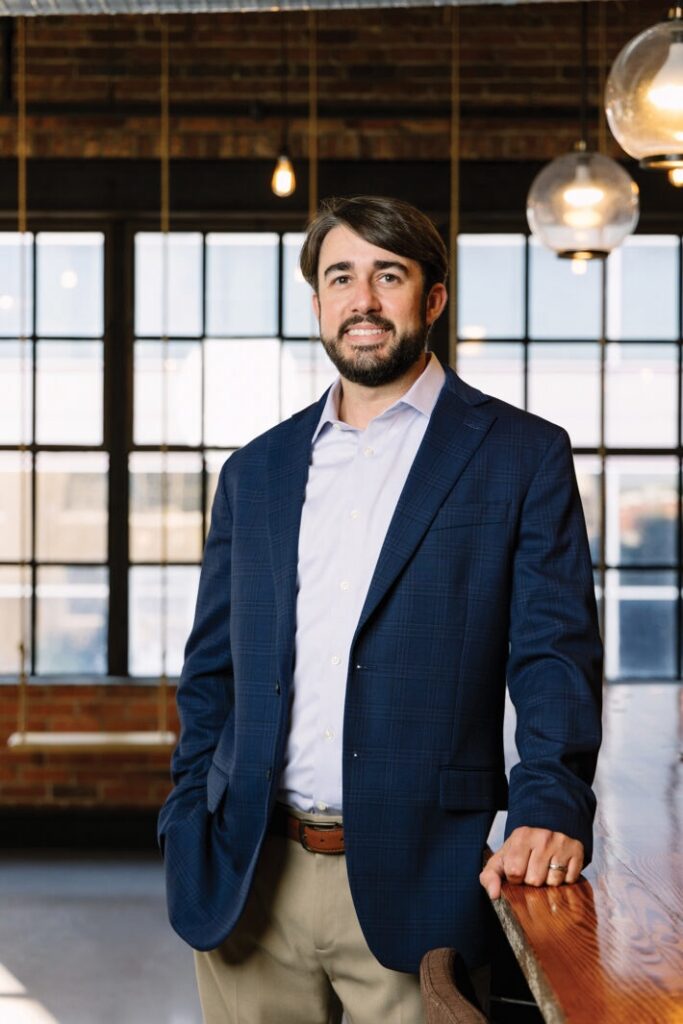
Jason Kudulis is deputy director of the Mobile Bay National Estuary Program. (Mobile Bay National Estuary Program)
For Kudulis and team, the conservation concern is clear. “We know we have a problem. These things are listed on the state’s impaired waters list facilitation, so it’s recognized as not meeting its natural function.” As far as potential solutions to this issue, the team saw two primary options.
The first is the implementation of traditional gray infrastructure, which primarily encourages the construction of newer or deeper ditches alongside roadways. From the team’s perspective, this solution seemed less effective in the long term, as it would simply send the water downstream without reducing its energy or protecting the ecosystem.
The second option would be to implement nature-based solutions or green technologies. For Kudulis, this means “coming in and rebuilding the stream in a modified or augmented way that follows natural channel design and principles of stormwater conveyance.”
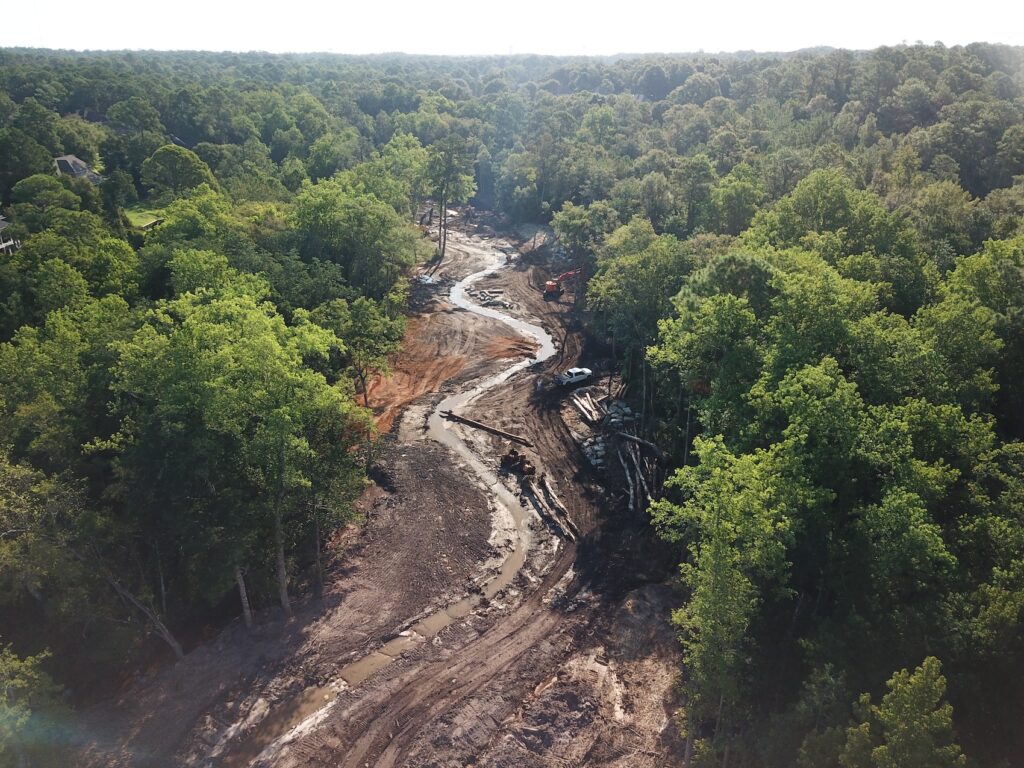
The D’Olive Watershed Restoration has been going on for more than 10 years and has been a great success. (Mobile Bay National Estuary Program)
The D’Olive Watershed Restoration, led by the Mobile Bay National Estuary Program, captures the effectiveness of this approach and the intentionality of the team behind it. This ongoing project has been in process for years and has seen startling success. “We’ve been active in this watershed over the last 10 years, and really longer than that, restoring it,” Kudulis says. He notes of his team’s chosen strategy, “We’re doing it in a way that retains the water quality improvements and improves the riparian areas of the aquatic habitat and the whole aesthetic and vibe of those systems.”
“They [the community] wanted to treat the symptom. The symptom was a lake in the community. A manmade feature that was important to the community was being degraded. So, instead of treating the symptom, we wanted to attack the cause.” Kudulis and team uncovered the root issue as they travelled upstream into the headwaters. In a certain area, erosion and other problems were taking place, and it was their responsibility to resolve them.
“For us, it has been this strategic examination of the watershed and identifying these hot spots or these areas of erosion — they’re called headcuts — to begin with.” These headcuts are what contribute to the unwanted downstream effects that often warrant initial investigation. “A headcut actually runs upstream. It’s like pulling on a thread on your dress. … Before you know it, you unravel the whole thing.”
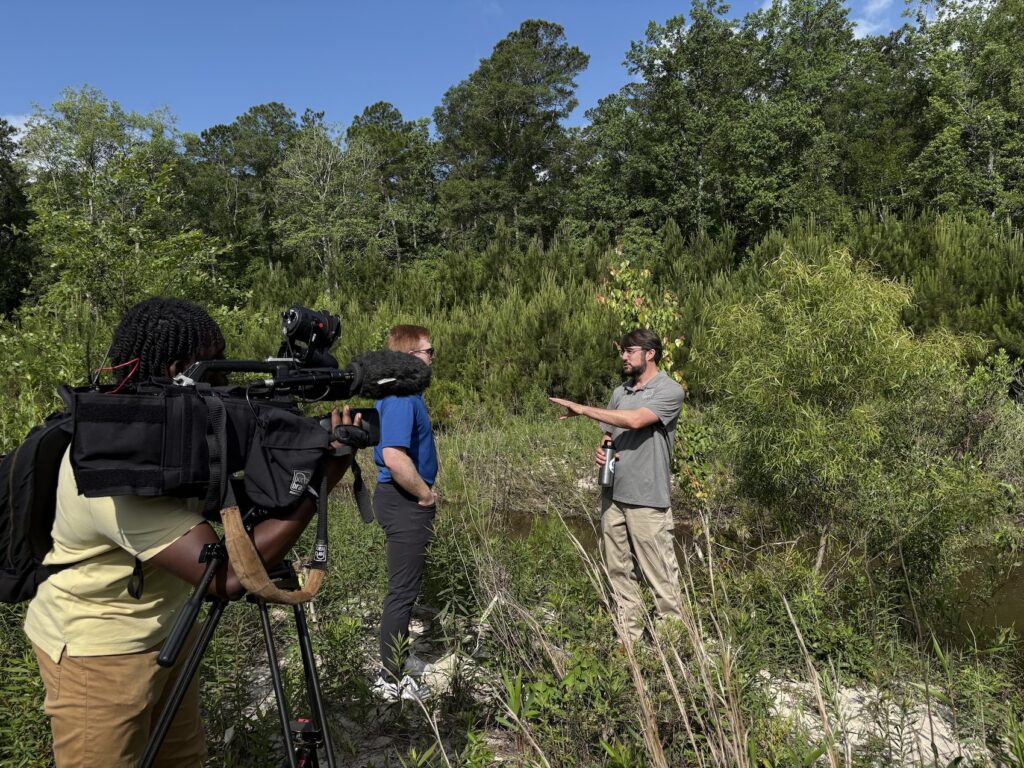
The Mobile Bay National Estuary Program’s efforts have drawn national recognition. (Mobile Bay National Estuary Program)
In terms of the overarching strategy of the team’s work, Kudulis says, “We’re hopeful to shift from a reactive to a proactive situation. We can find them [issues] when they’re small and get in there and be strategic and surgical.” The D’Olive Watershed model has been so effective that it has gained national recognition. As Kudulis says, “If you zoom out from the model in D’Olive, we’ve seen that it works. It’s been recognized nationally, and it’s been beneficial.”
Kudulis says actions taken across Alabama can have a direct impact on the coastal space locals love. “The majority of the sediment that enters Mobile Bay comes from upstate. It’s not all just local. We’re managing it locally, but I think it’s important for people statewide to think about decisions they make with their own property.” For Alabama’s beauty to remain intact and flourishing for generations to come, the effort must be expansive. “When we talk about land use management, stormwater management, all those things have a message that rings statewide,” Kudulis says.
For more information and to find out how to get involved, click here.
This story originally was published on the SoulGrown website.