James Spann: Drier days ahead for Alabama; heat levels creep up

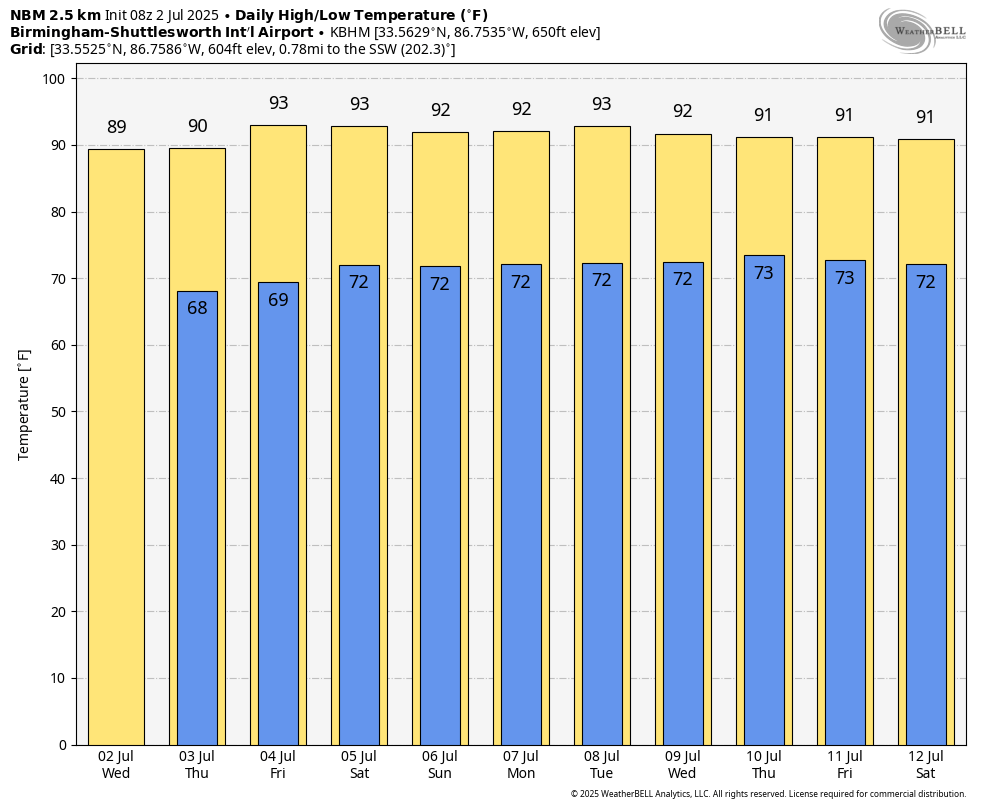
DRIER DAYS: A drier air mass is slipping into Alabama early this morning. There’s nothing on radar at daybreak, and any showers this afternoon will be very isolated and confined to the southern third of the state. With a partly sunny sky, temperatures will peak around 90 degrees this afternoon.
THURSDAY THROUGH THE WEEKEND: The weather looks unusually dry for summer. Afternoon showers will be almost impossible to find; expect a good supply of sunshine each day with highs mostly in the low 90s. The chance of any one spot getting wet each afternoon is 10% or less.
Even on the Gulf Coast, showers over the Fourth of July weekend will be very widely spaced; expect a partly to mostly sunny sky daily.
NEXT WEEK: Moisture levels slowly rise, so a few spotty afternoon showers or storms will be possible through the week, but there’s no sign of any elevated rain coverage based on the forecast upper air pattern.
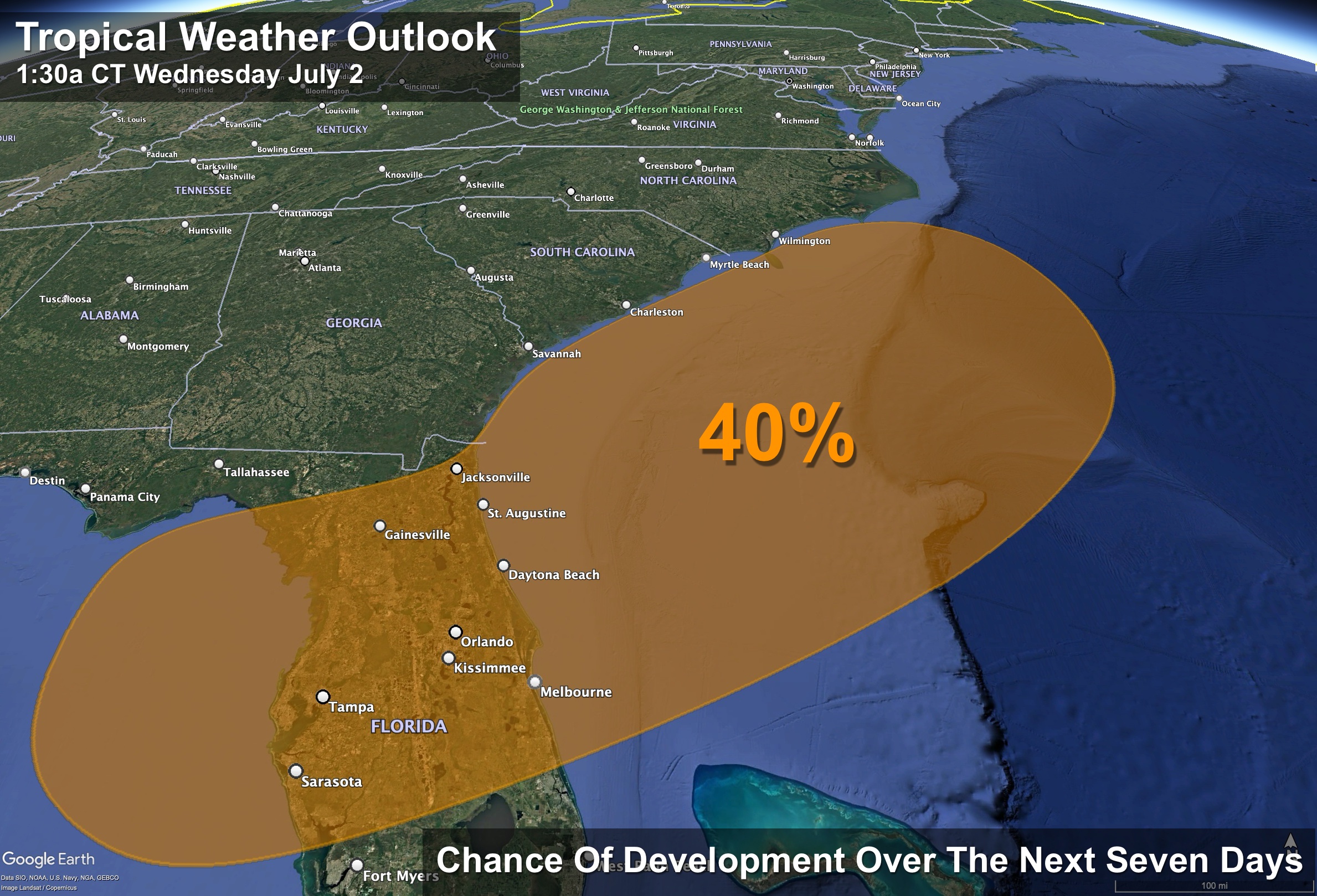
TROPICS: An area of low pressure could develop near the southeastern U.S. Atlantic or Gulf coasts by this weekend along a weakening frontal boundary. Environmental conditions appear only marginally conducive for some slow development, but a tropical or subtropical depression could form in this region over the weekend or early next week while the system moves little.
Regardless of development, heavy rainfall is possible across portions of the Southeast, particularly across the west-central Florida coast (places like Tampa and Sarasota). This enhanced rain coverage will be east of the central Gulf Coast (Gulf Shores to Panama City Beach), where the weather looks very favorable for the holiday weekend.
The National Hurricane Center is showing a 40% chance of development; global models suggest the higher chance is over the Atlantic, not the Gulf.
ON THIS DATE IN 1843: An alligator reportedly fell from the sky onto Anson Street in Charleston, South Carolina, during a thunderstorm.
ON THIS DATE IN 2001: In Michigan, frost and freezing temperatures were observed in some locations, with Grant dropping to 29 degrees. Muskegon reported its coldest July temperature on record, 39 degrees.
For more weather news and information from James Spann and his team, visit AlabamaWx.