James Spann: Hot, humid days for Alabama with a few afternoon storms

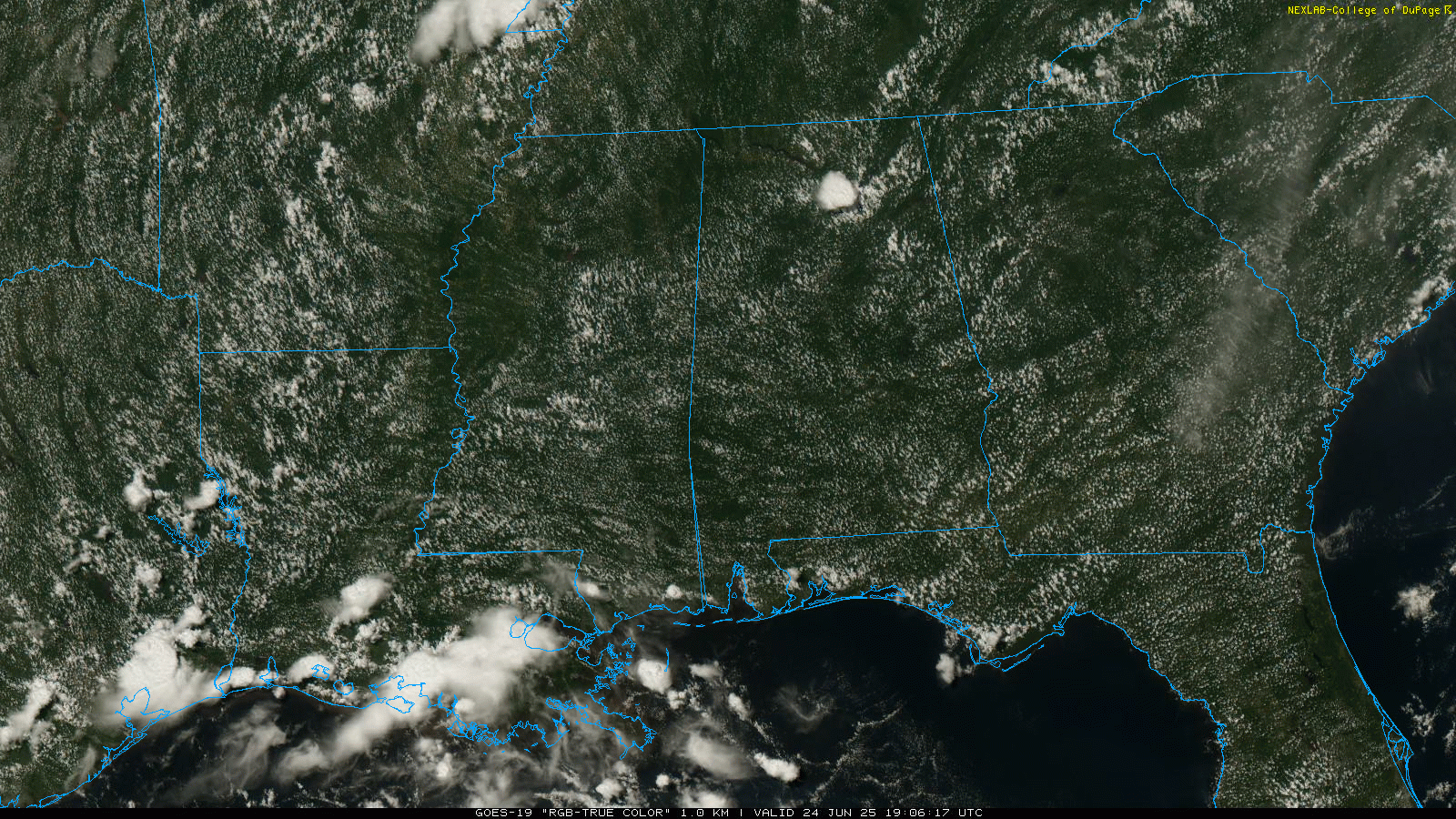
RADAR CHECK: Showers and storms are few and far between so far across Alabama this afternoon. Temperatures are in the low to mid 90s with a partly to mostly sunny sky. Isolated showers end after sunset.
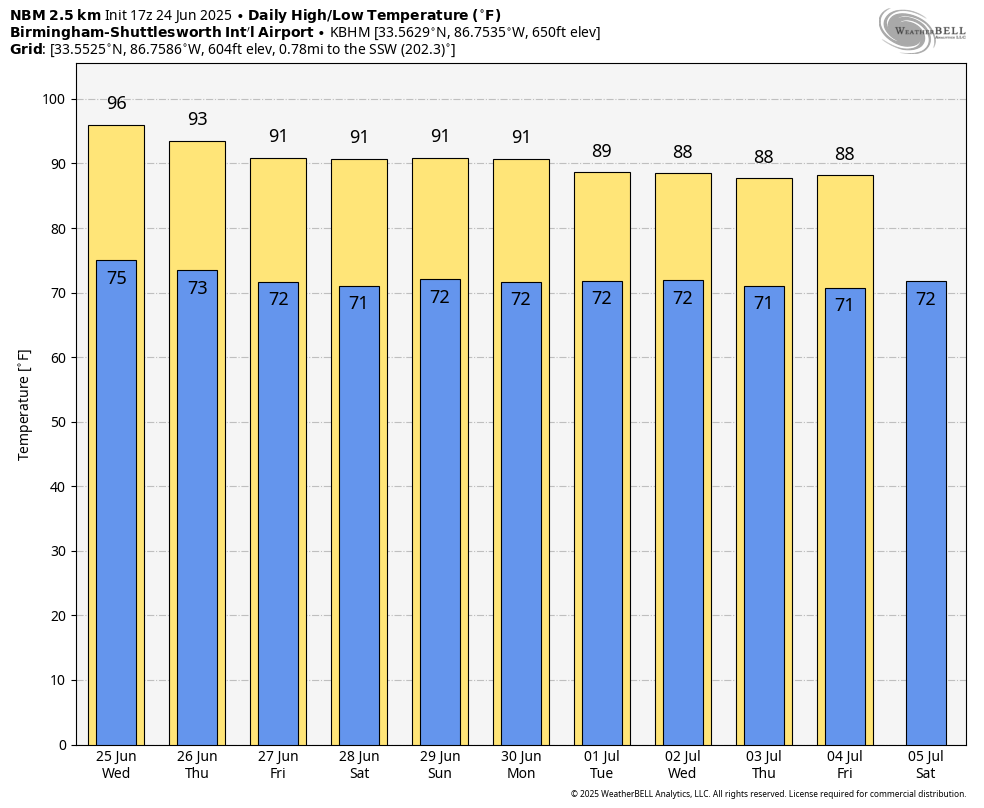
Hot, humid summer weather will continue to headline the forecast for Alabama through midweek. Expect a high Wednesday between 93 and 98 degrees; a heat advisory is in effect for the northern two-thirds of the state with the heat index potentially touching 105 at times. Showers and storms will form during the peak of the heat, but they will be widely scattered, and not everyone will see a cooling shower.
The Storm Prediction Center has much of Alabama in a severe weather risk both Wednesday and Thursday; where afternoon storms do form, they will be heavy, with potential for strong, gusty winds and small hail. The chance of any one spot seeing an afternoon storm is 20-30% today and 30-40% Wednesday and Thursday. Most of them will come from around 1 until 9 p.m.
FRIDAY AND THE WEEKEND: The upper ridge over the eastern half of the nation will weaken, meaning slowly falling heat levels and increasing coverage of afternoon showers and thunderstorms. Expect a mix of sun and clouds daily with highs between 87 and 91 degrees for most communities. The chance of any one spot getting wet each afternoon is 55-65%.
NEXT WEEK: The weather won’t change much, with humid days, highs between 87 and 91 degrees and scattered showers and thunderstorms during the afternoons and evenings — pretty much what we expect around here in late June and early July.
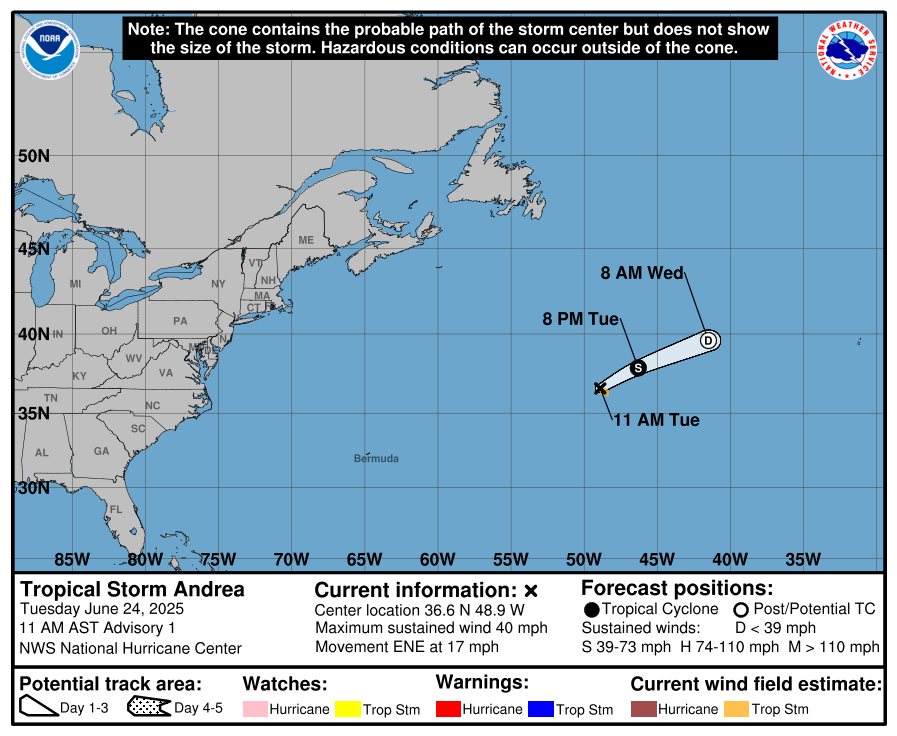
TROPICS: The National Hurricane Center has designated the disturbance in the middle of the Atlantic Tropical Storm Andrea. It is a junk, short-lived system that will dissipate soon far from land. Winds are 40 mph this afternoon based on satellite estimates. The rest of the Atlantic basin is very quiet.
ON THIS DATE IN 1975: An Eastern Airlines Boeing 727 crashed at JFK airport in New York City. Of 124 people on board the aircraft, 113 died. Researcher Theodore Fujita studied the incident and discovered that a microburst caused the crash. His research led to improved air safety. The tower never experienced the microburst, which was held back by a sea-breeze front. The plane crashed 2,400 feet short of the runway.
For more weather news and information from James Spann and his team, visit AlabamaWx.