James Spann: Mid 90s for Alabama today, Tuesday; lower heat levels by the weekend

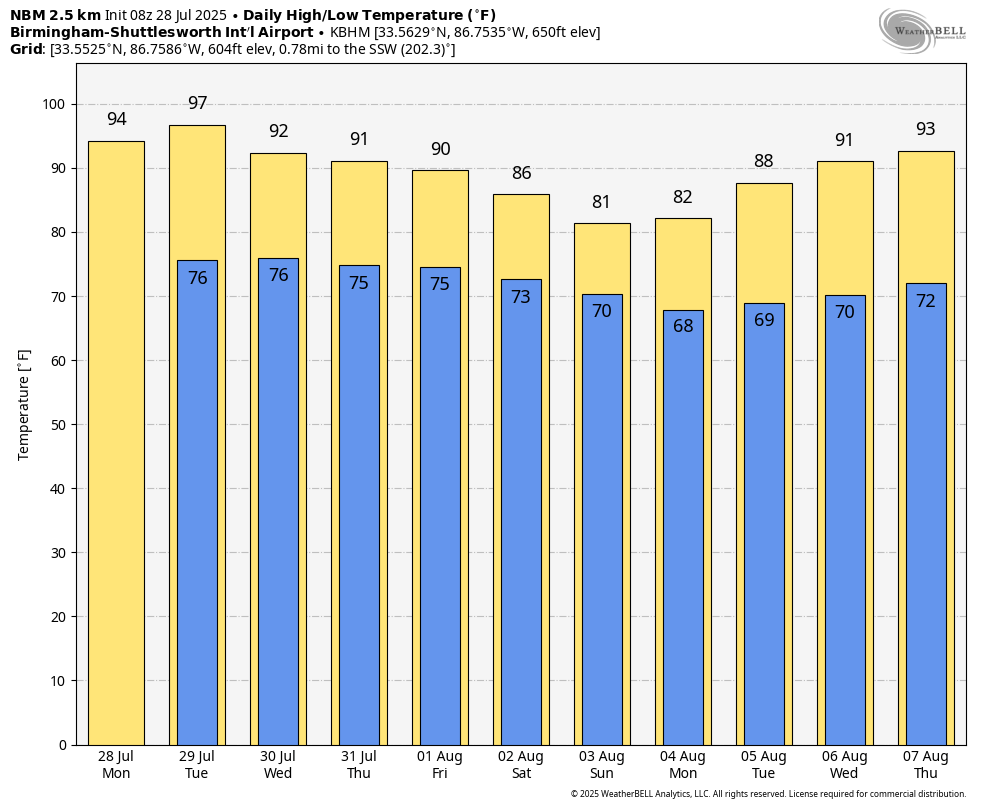
LATE JULY IN ALABAMA: We are into the hottest part of summer (mid-July through mid-August), so having a high in the mid 90s isn’t unusual. We expect a high between 93 and 97 degrees for most of Alabama today and Tuesday with an upper ridge overhead; afternoon showers and storms will be isolated.
The ridge weakens over the latter half of the week, meaning slowly falling heat levels and slowly rising coverage of afternoon and evening showers and thunderstorms. By Friday the high will be between 88 and 92 degrees with a better than 50% chance of any given location seeing an afternoon shower or storm.
THE ALABAMA WEEKEND: Global models suggest temperatures will be well below average — highs in the mid 80s Saturday and potentially in the low 80s Sunday. Some record-low maximum temperatures are possible Sunday. The sky will be occasionally cloudy both days with scattered to numerous showers and thunderstorms. It won’t be a washout, but expect some rain from time to time both days with higher coverage during the afternoons and evenings.
The ridge begins to rebuild next week, with highs back in the low 90s by midweek along with the usual risk of scattered, mostly afternoon and evening showers and thunderstorms.
TROPICS: All remains very quiet across the Atlantic basin; tropical storm and hurricane formation is not expected through at least the next seven days.
ON THIS DATE IN 1996: Hurricane Cesar-Douglas made landfall in Nicaragua. It was one of the few tropical cyclones to survive the crossover from the Atlantic to east Pacific basin and was the last to receive a new storm name upon doing so. Hurricane Cesar was the third named storm and second hurricane of the 1996 Atlantic hurricane season. The system formed in the southern Caribbean Sea and affected several countries in South America before crossing Nicaragua and entering the Eastern Pacific, where it was renamed Hurricane Douglas, the fourth named storm, third hurricane and first and strongest major hurricane of the 1996 Pacific hurricane season. The storm killed 113 people in Central and South America and left 29 others missing, mainly due to flooding and mudslides.
For more weather news and information from James Spann and his team, visit AlabamaWx.