James Spann: Strong to severe storms for north, central Alabama Saturday afternoon

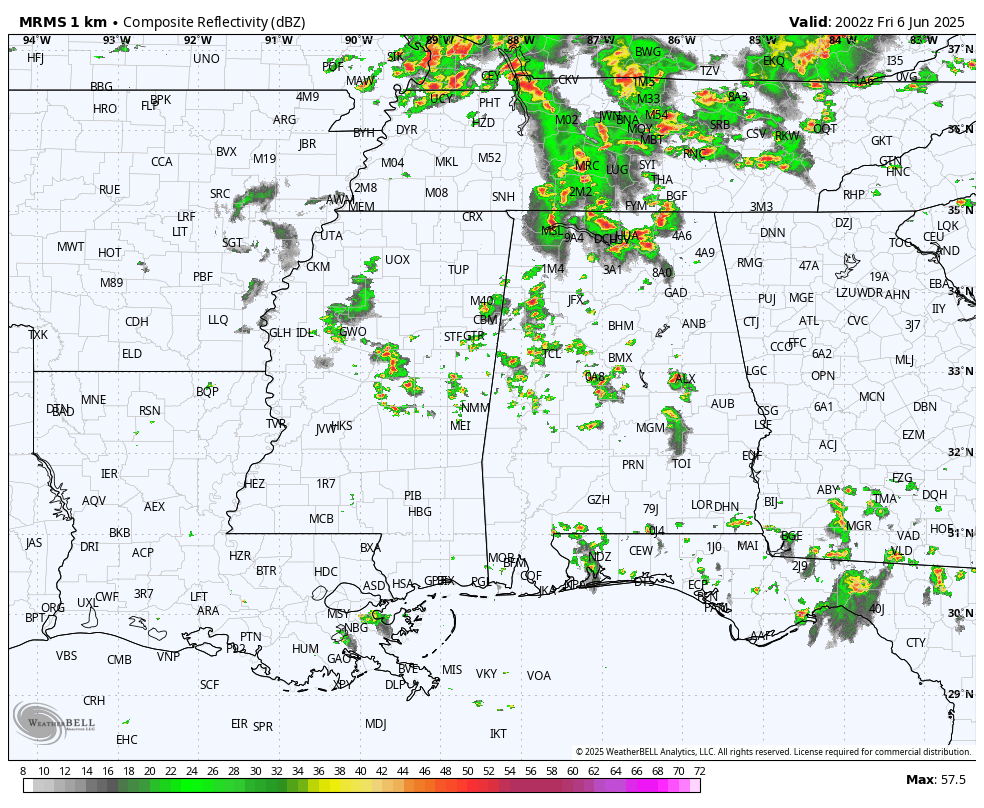
RADAR CHECK: We have a classic case of random, scattered showers and thunderstorms across the northern half of Alabama this afternoon; the weather is mostly dry over the southern counties, with only isolated showers. A few thunderstorms are producing gusty winds and small hail; scattered showers and storms will end after sunset.
THE WEEKEND: While Saturday morning will be generally dry, the high-resolution models continue to up on the idea of an organized area of thunderstorms moving through the northern half of Alabama with potential for strong, damaging winds and hail. This mass of storms will sweep through between 1 and 7 p.m.; winds could be strong enough in spots to bring down trees and power lines. If you have anything planned outdoors Saturday afternoon, be sure and pay attention to severe thunderstorm warnings.
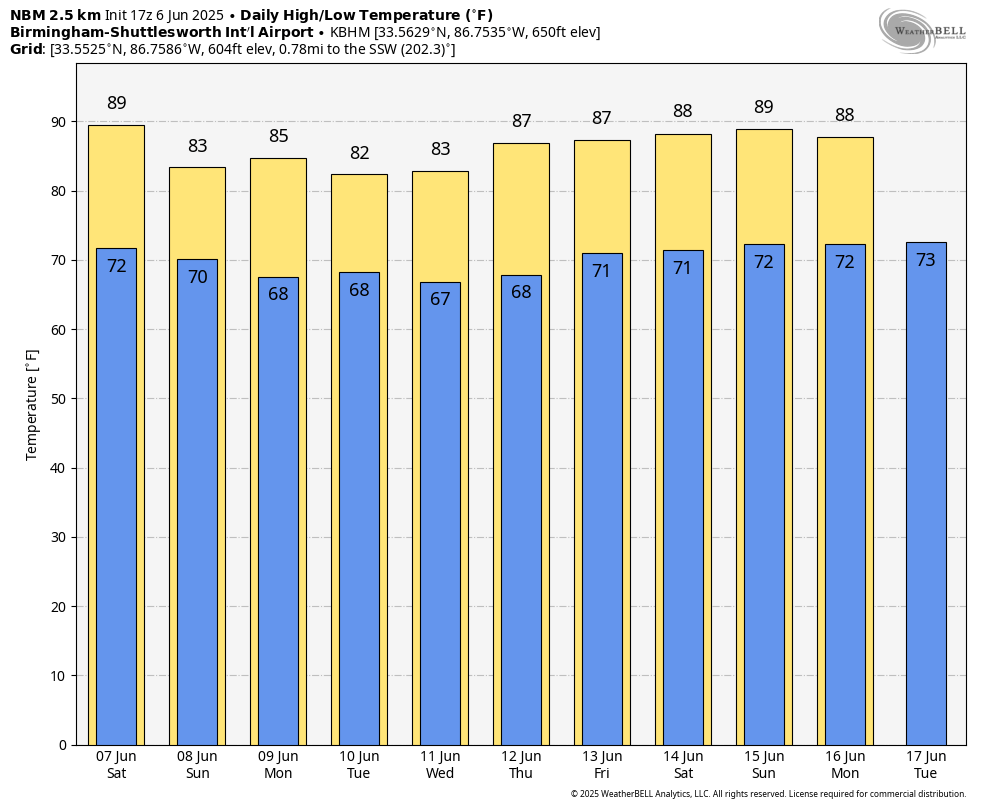
On Sunday, the sun will be out at times, but scattered showers and storms remain possible. The highest risk of showers and storms will be over the northern two-thirds of the state, and temperatures reach the mid 80s.
The Storm Prediction Center has defined a risk of severe thunderstorms for much of north and central Alabama daily through Sunday due to the wind and hail potential. Parts of north and central Alabama are in a level 3 out of 5 enhanced risk for Saturday afternoon.
NEXT WEEK: A very humid air mass will stay parked across the Deep South, meaning the risk of scattered, mostly afternoon and evening showers and thunderstorms daily. Otherwise, expect partly sunny days with highs in the 80s.
TROPICS: The Atlantic basin is quiet; tropical storm and hurricane formation is not expected at least for the next seven days.
ON THIS DATE IN 1816: The temperature reached 92 degrees at Salem, Massachusetts, during an early heat wave, but then plunged 49 degrees in 24 hours to commence the famous “year without a summer.” Snow fell near Quebec City, Canada, June 6-10 and accumulated up to a foot with “drifts reaching the axle trees of carriages.”
ON THIS DATE IN 1944: A strong system approaching Europe on June 4, 1944, had ended up delaying the original invasion of northern France on June 5. There were even disagreements in the forecast between American and British forecasters. Ultimately, Group Capt, James Stagg of the United Kingdom’s Supreme Headquarters, Allied Expeditionary Force, persuaded Gen. Dwight D. Eisenhower to change the date of the invasion to June 6 based on weather observations from a ship in the Atlantic.
For more weather news and information from James Spann and his team, visit AlabamaWx.