James Spann: Sun, heat, a few afternoon storms for Alabama

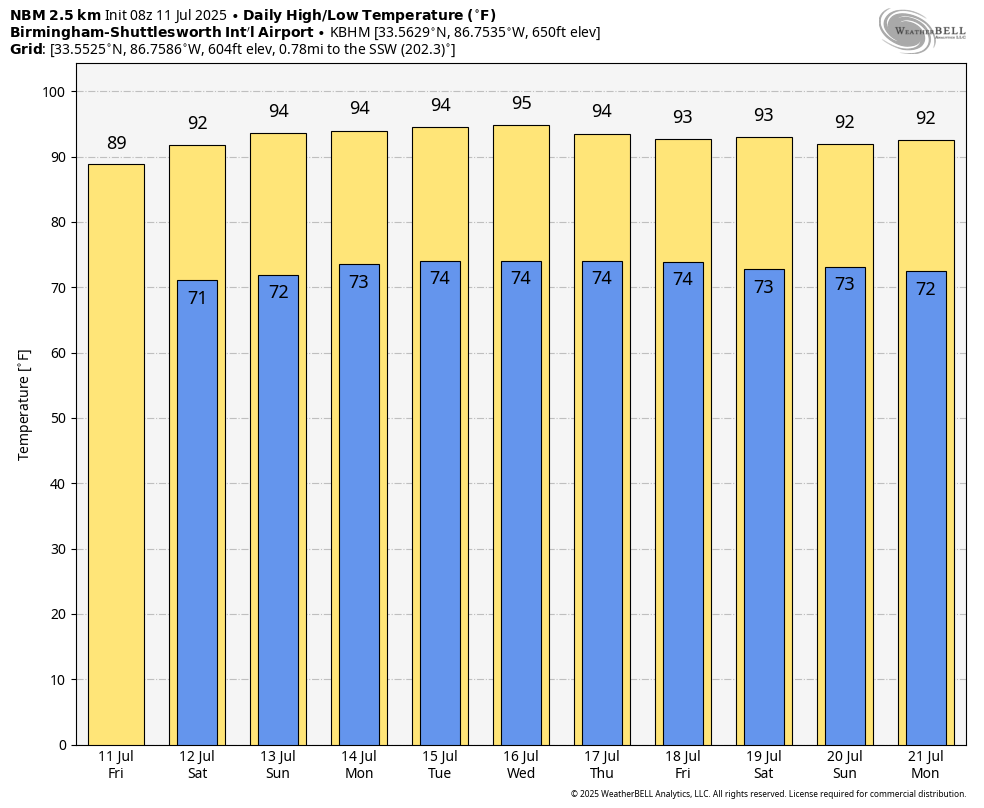
SUMMER DAYS: Alabama’s weather won’t change much through the weekend, with partly to mostly sunny, hot, humid days and a few afternoon and evening showers and thunderstorms in spots. Highs will be around 90 today, followed by low 90s Saturday and mid 90s Sunday. The chance of any one spot getting wet is 50-60% today and 30-40% over the weekend.
NEXT WEEK: Hot summer weather continues. The air aloft will be a little warmer, making for a more stable atmosphere. This means heat levels will be up a bit, and the coverage of afternoon showers and storms will be a tad lower. But the overall idea is the same — lots of morning sunshine and a few random showers and thunderstorms during the afternoons and evenings. Highs will be in the mid 90s through most of the week; it looks like the hottest week so far this summer.
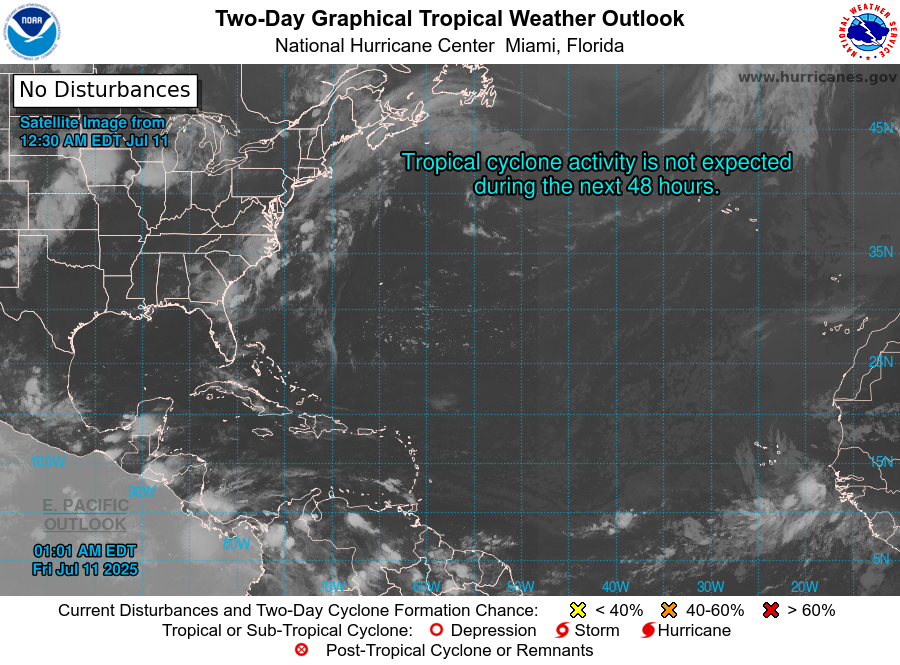
TROPICS: Again today, there are no areas of interest across the Atlantic basin. Tropical storm and hurricane formation is not expected for at least the next seven days.
ON THIS DATE IN 1936: From July 5 to July 17, temperatures exceeding 111 degrees in Manitoba and Ontario, Canada, claimed 1,180 lives (mostly the elderly and infants) during the most prolonged, deadliest heat wave on record. Four hundred of these deaths were people who drowned seeking refuge from the heat. In fact, the heat was so intense that steel rail lines and bridge girders twisted, sidewalks buckled, crops wilted and fruit baked on trees.
ON THIS DATE IN 1980: Birmingham’s high was 102 degrees as the generational heat wave of 1980 intensified. Starting on July 10, Birmingham’s highs were 101, 102, 104, 106, 103, 102, 105, 105. The hottest day of the summer was July 17, when more than 80% of the state reached 100 degrees and nearly one-quarter of the state reached 105. The highest reading that day was 108 degrees, recorded in the cities of Bessemer, Aliceville and Jasper. It was 105 in Birmingham that day. In July alone, there were an estimated 120 heat-related deaths along with the loss of more than 200,000 chickens and half the state’s corn crop. Around the nation, the heat wave claimed between 1,250 and 10,000 lives.
For more weather news and information from James Spann and his team, visit AlabamaWx.