16 finalists selected for $75,000 Sloss.Tech/Ideas Pitch Competition

The annual Sloss.Tech conference will take place June 25-27 in downtown Birmingham’s historic theatre district. As part of the highly regarded technology and innovation conference, 16 startup companies have been selected as finalists in the inaugural Sloss.Tech/Ideas Pitch Competition, with winners to be announced during the conference. The selected startups will compete for a total of $75,000, including a $50,000 Grand Prize, a $10,000 People’s Choice Award and three $5,000 Category Winner awards.
Sponsored by TechBirmingham and made possible through a grant from the Regions Foundation, the inaugural competition attracted applicants from 10 Southeastern states — Alabama, Arkansas, Florida, Georgia, Kentucky, Louisiana, Mississippi, North Carolina, South Carolina and Tennessee. The finalists represent seven states, underscoring the Southeast’s continued emergence as fertile ground for innovation and the economic growth it will continue to drive in the 21st century, said TechBirmingham president and CEO Deon Gordon.

Deon Gordon, president and CEO of TechBirmingham. (contributed)
“The number and caliber of applications we received highlights the supportive climate for innovation across the Southeast,” said Gordon. “This competition demonstrates the strength, diversity and ongoing impacts of the technology companies and talent we will continue to develop and attract, in Birmingham and throughout the entire region.
“These 16 finalists represent the future of technology.”
The 2025 edition of Sloss.Tech marks an expansion of the conference. After six consecutive sellouts, the annual conference is moving from a one-day event to a comprehensive three-day experience. Gordon said the expanded lineup, including the pitch competition, will enhance Sloss.Tech’s position among the Southeast’s premier showcases for technology and innovation. Presenting sponsors of Sloss.Tech are Innovate Alabama, the City of Birmingham and Jefferson County.
The companies in the Sloss.Tech pitch competition are from four key technology and innovation sectors: agtech and foodtech, healthtech and biotech, mobility and transportation technology, and emerging tech. To qualify, a company must have a product or service launched no earlier than January 2020 and have raised no more than $5 million in startup funding to date.
The categories, along with the finalists and their hometowns, are:
Agtech and Foodtech
Good Agriculture (Atlanta). Founded by Alex Edquist, Good Agriculture is an AI-powered business management platform for farms, designed to help small farmers spend less time on administrative tasks.
Onteko (Olive Branch, Mississippi). Founded by Luis Ponce Cabrera, Onteko is pioneering agricultural laser tech with Foliar Laser Boost, a patented system to boost yields by delivering precise, efficient, sustainable crop treatments.
See Produce (Huntsville). Founded by Pandian Rajaram, See Produce uses an AI-powered solution to reduce waste, cut costs and boost efficiency of “farm to fork” delivery with quality checks, tracking of expiration dates and forecasts of inventory.
Ranalia (Huntsville). Founded by David Gaddes, Ranalia uses hyperspectral imaging and AI to prevent shipment of any contaminated foods.
Healthtech and Biotech
Hera Health Solutions (Memphis). Founded by Idicula Mathew, Hera Health Solutions is a nanotechnology company that is developing a biodegradable drug delivery platform to adapt existing drugs into long-acting formats that improve efficacy and patient outcomes.
PulManage (Columbia, South Carolina). Founded by Amanda Clark, PulManage remotely delivers high-quality pulmonary diagnostics for academic researchers, clinical trials and real-world use, offering scalable, compliant solutions in a growing, $1.3 billion market.
VanquishBio (Birmingham). Co-founded by Bryan Allinson and backed by the National Cancer Institute, VanquishBio is developing Onkevi, a first-in-class NK cell-derived therapy targeting hard-to-treat cancers.
WiNK Therapeutics (Miramar, Florida). Founded by Warren Marcus, WiNK Therapeutics is developing a proprietary RNA aptamer platform for delivering groundbreaking treatments of Type 1 diabetes and solid tumors.
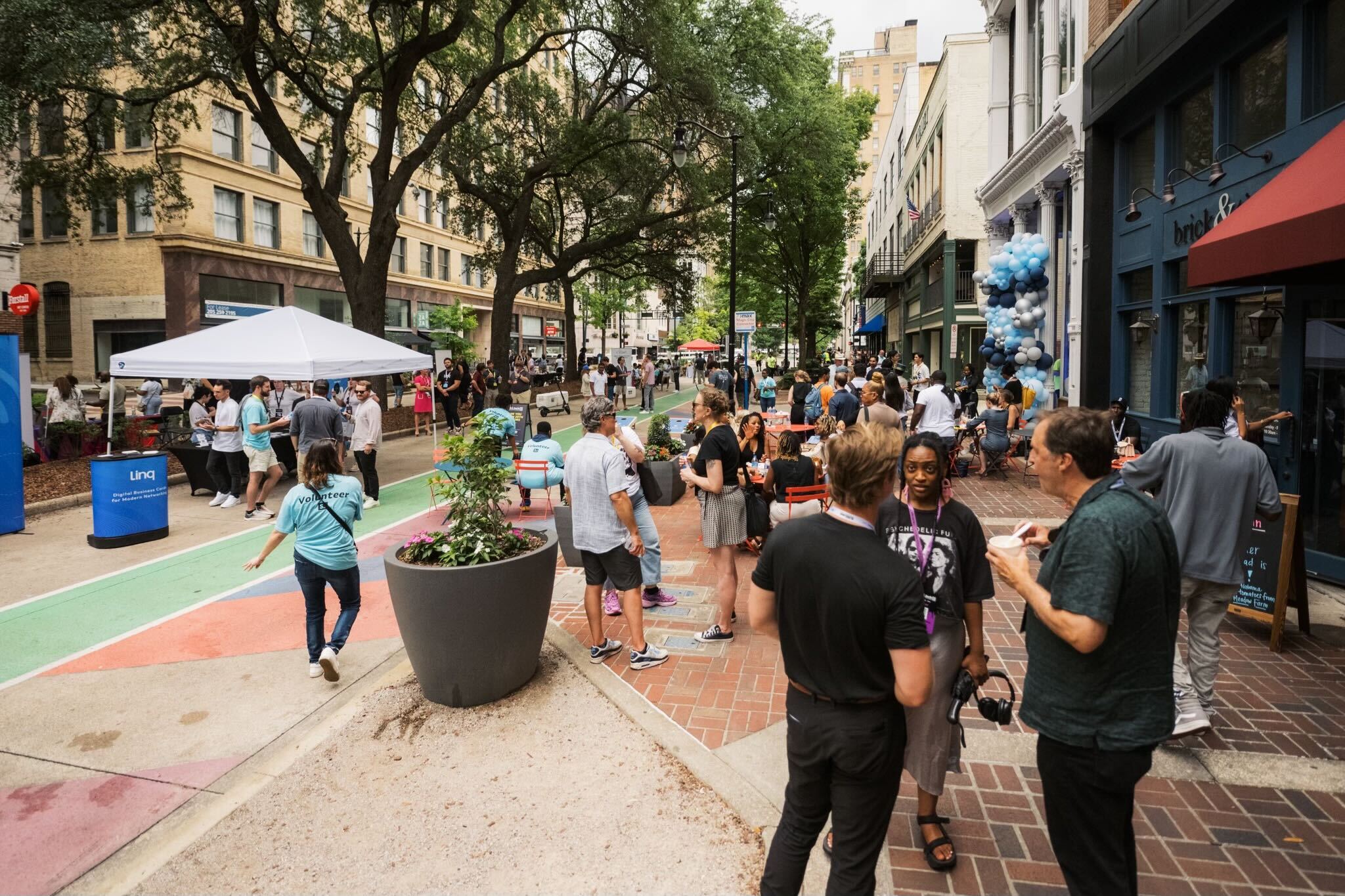
Some of the sold-out crowd during a break at SlossTech 2024 in downtown Birmingham; this year, the conference is expanding to three days. (contributed)
Mobility and Transportation Technology
Airtrek Robotics (Covington, Kentucky). Founded by Chris Lee, Airtrek Robotics is building an autonomous solution to help aircraft operators enhance their ground handling process using robotics and AI.
Domestique (Birmingham). Founded by Nathan Pocus, Domestique is part of the next wave of mobility with its sustainability-first, user-focused electric charging network.
HERide (Atlanta). Founded by Jillian Anderson, HERide is a women-first rideshare platform built for safety and inclusion, connecting women riders with women drivers.
Limber Robotics (Memphis). Founded by Evan Drumwright, Limber Robotics is developing an automated solution for least-desired jobs in warehouses and fulfillment centers.
Emerging Tech
Croux (Birmingham). Co-founded by Jennifer Ryan with other hospitality industry veterans, Croux’s platform connects individuals to well-paying, flexible shift work at leading local businesses, with a focus on fair pay, work-life freedom and AI-powered tools.
Giggs (Nashville). Founded by Nikki Sanz, Giggs is a career platform for the live event industry, connecting vetted backstage professionals with top companies through mentorship, events and industry-focused media.
SymbyAI (Huntsville). Founded by Ashia Livaudals, SymbyAI automates peer review, replication and analysis with AI, easing the process of high-quality scientific research.
Querri (Mount Pleasant, South Carolina). Founded by Dave Ingram, Querri helps non-technical teams turn data into actual insights using natural language, empowering smarter, faster decision making.

Marta Self, executive director, Regions Foundation. (contributed)
“Our finalists represent the entrepreneurial spirit and innovation that drives economic growth,” said Marta Self, executive director of the Regions Foundation. “We’re excited to see how these companies will use this platform to accelerate their growth and create jobs in their communities.”
Primarily funded by Regions Bank, the nonprofit Regions Foundation supports programs focused on economic and community development, education and workforce readiness, and financial wellness.
Established in 2002, the nonprofit TechBirmingham is a community of tech and tech-adjacent organizations, groups and individuals with the goal of making Birmingham the South’s most innovative and inclusive technology ecosystem. Through diverse programming and community initiatives, TechBirmingham strengthens and promotes the ecosystem and its companies, helps recruit and retain tech talent and entrepreneurs, and provides educational opportunities.