Innovate Alabama and Harmony Venture Labs launch studio and fund to build scalable startups

Innovate Alabama has partnered with Harmony Venture Labs (HVL) to launch the Innovate Alabama Venture Studio and Fund, a new initiative aimed at helping build and grow high-potential startups in Alabama.
Powered by HVL’s successful studio model, this effort will work alongside local companies to turn real-world business challenges into investable, scalable ventures – all while fueling the state’s startup ecosystem.
“The venture studio model gives us a unique opportunity to build with intention by developing startups that are not only innovative but also aligned with Alabama’s economic priorities,” said Mary Beth Grant, program director of the Innovate Alabama Capital Access Initiative, one of the driving forces behind the studio’s creation.
This initiative focuses on removing obstacles to accessing early-stage capital.
“Through the work of the Capital Access Initiative, the idea for the Innovate Alabama Venture Studio quickly stood out as one of the most impactful ways we could move the needle,” said Britney Summerville, Innovate Alabama board member and chair of the Innovate Alabama Capital Access Initiative. “By embedding innovation inside Alabama’s cornerstone industries and building high-growth startups from the ground up, we’re thinking outside the box about how we solve our biggest problems and how the state takes the lead in venture creation.”
The studio is managed by Harmony Venture Labs (HVL), a Birmingham-based venture studio founded and led by entrepreneur and investor Shegun Otulana.
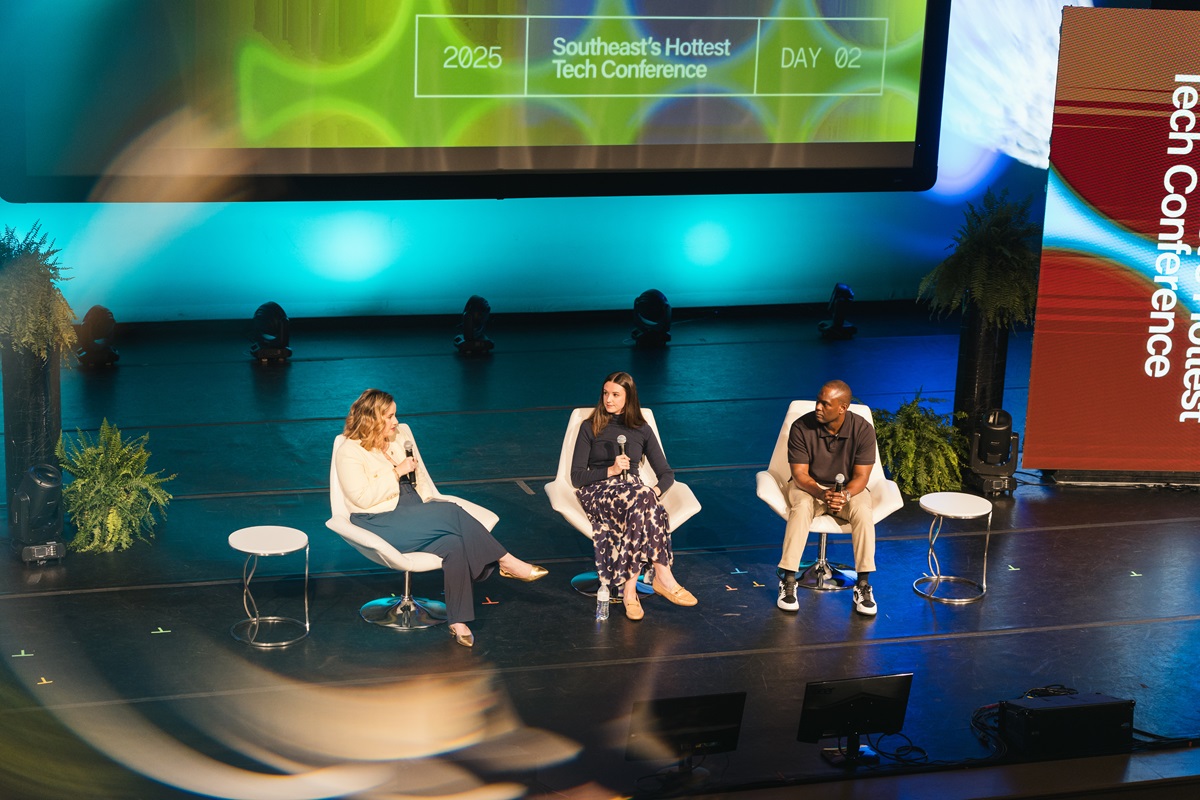
At Sloss.Tech 2025 in Birmingham, Mary Beth Grant (center), program director of the Innovate Alabama Capital Access Initiative, and Harmony Venture Labs founder Shegun Otulana (right) were part of a panel discussion moderated by Fast Company and Inc. contributor Abigail Bassett (left) that explored the new Innovate Alabama Venture Studio and Fund and other groundbreaking startup funding initiatives. (contributed)
“When I started launching startups in Alabama, the opportunity to build was always here – but capital and attention weren’t,” Otulana said. “This studio partnership is our answer to that gap: building real companies around real problems, with early customer validation and the backing to grow. As these ventures succeed, they attract capital, which draws more talent, and together, they fuel the next generation of startups. That’s how we create a lasting engine for innovation – one that raises Alabama’s tech profile and drives meaningful economic impact for its citizens.”
The problem solver
As a leading innovation and growth company in Birmingham’s technology space, Harmony Venture Labs will bring its proven process for launching, growing and supporting startups to the new partnership.
For Otulana, this venture – and all ventures – should center on solving problems.
“We start with the problem. Always,” Otulana told Alabama News Center. “We spend time with people in the industry, try to understand what’s actually broken, then test a few things. If there’s a real signal, we build – fast. And we help bring in the team, the early capital, all the scaffolding.”
Otulana stressed that simply starting a company is not enough.
“The goal isn’t just to launch a company; it’s to build momentum,” he said. “Once that’s real, the attention and investment usually follow.”
The Innovate Alabama Venture Studio and Fund aims to launch 10 new companies and attract $10 million in venture capital by 2028 and hopes to generate millions in economic impact across the state.
“We’re focused on companies that solve real, operational problems – especially in places people tend to overlook,” Otulana said. “Not flashy fads, just useful software that actually helps people get their work done. If there’s complexity and nobody’s really cracked it yet, that’s usually a good sign.”
Otulana believes there’s no shortage of industry challenges that need to be addressed.
“Just talk to folks working in logistics, or healthcare or manufacturing,” he said. “They’re dealing with real pressure and, honestly, pretty outdated tools. The problems are right there in front of us. We just have to be willing to listen and build with the people who live them every day.”