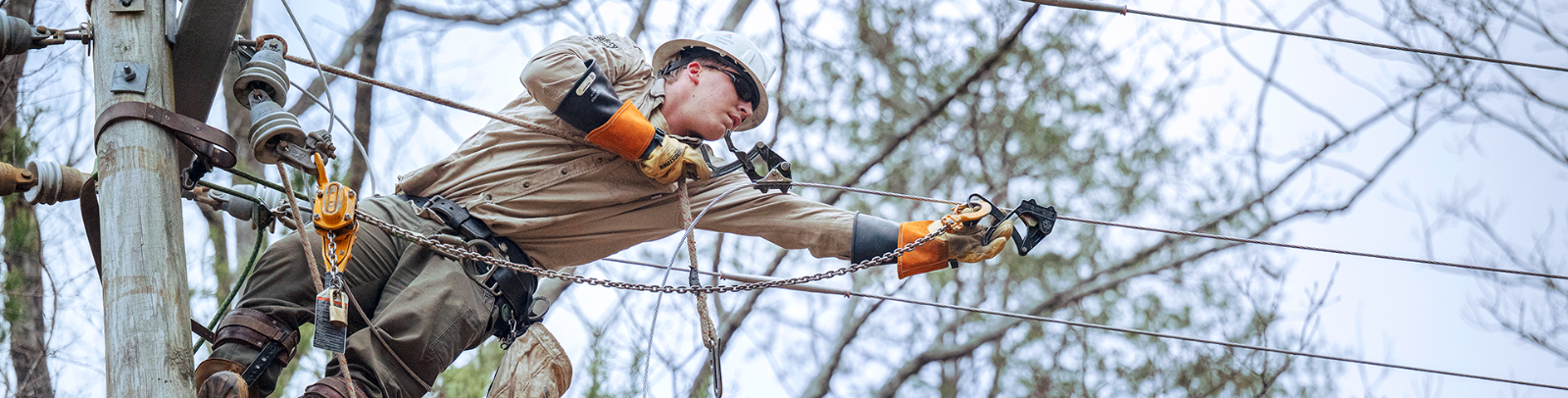

How does Alabama Power restore power after a storm?
After a major storm, Alabama Power restores power using a set of priorities that helps bring the most customers back the fastest, as safely as conditions allow.
Short answer: After a major storm, Alabama Power restores power using a proven set of priorities that focuses on public safety and the repairs that restore the most customers first. Multiple crews work at the same time across the system – transmission, substations, main distribution lines, neighborhood lines and individual services. Even with parallel work, electricity still has to flow through the system in order: transmission lines feed substations, substations feed main lines, and main lines feed neighborhoods and homes. That’s why restoration isn’t done street by street or based on who called first.
Overall, Alabama Power’s service reliability is about 99%, and over the past decade about two-thirds of outages were restored within two hours.
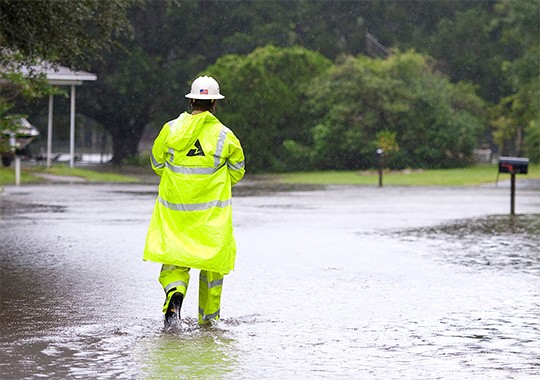
What to Know
- Restoration follows a standard set of priorities used across the electric utility industry. It’s not random, and it’s not based on who calls first.
- Crews work in parallel. At the same time, different teams are assessing damage, clearing trees, repairing high-voltage lines, restoring substations, and fixing local lines.
- Even with parallel work, there’s a “power path” that has to be rebuilt so electricity can reach homes: transmission lines – substations – main distribution lines – neighborhood lines – individual services.
- Critical facilities – such as hospitals, water systems, 911 centers and shelters – are prioritized because they protect public health and safety.
- Work begins before storms arrive: staging crews and materials, pre-positioning equipment and coordinating with other utilities through a nationwide mutual assistance network.
- Outages are usually caused by damage on the power-delivery system – not a shortage of electricity being generated.
Quick Facts
- Overall service reliability is about 99%. Over the last 10 years, two-thirds of outages were restored within 2 hours.
- Alabama averages about 57 tornadoes per year, making it one of the most tornado-prone states in the country. (National Weather Service)
- Alabama is about 70% forested. Trees are the No. 1 cause of outages, which often means clearing has to happen before repairs can start. (U.S. Forest Service)
- About 42% of Alabama residents live in rural areas – one of the highest rates in the Southeast. That means more miles of line per customer and longer travel distances for crews. (U.S. Census)
- In 2025, outage-prevention technology helped keep about 600,000 customers from experiencing a prolonged outage, avoiding 112 million minutes of interruption.
- Energy companies across the country participate in a nationwide mutual assistance network that sends crews and equipment across state lines after major storms. (Edison Electric Institute)
Frequently Asked Questions
Why did my neighbor get power back before me?
Most of the time, it comes down to where each home connects to the system – not who has priority. Two houses on the same street can be served by different lines, a different circuit, or even a different substation. When a main line is repaired, every customer on that line comes back at once. A nearby home on a separate line may still be out until its own repair is made.
Does reporting an outage speed up restoration?
Our smart meters can detect most outages automatically, so in many cases we already know your power is out before you call. But reporting still helps. When you report through the app, website, text or phone, it adds detail that meters alone can’t provide – like a tree on a line, a downed pole or damage in a specific spot. That kind of information helps crews prepare before they arrive and can uncover issues that aren't obvious from the system view alone.
Why does it sometimes take days to restore power after a major storm?
Major storms can break poles, damage miles of line and block roads with downed trees. Some repairs require heavy equipment and specialized crews. In a state that’s 70% forested and 42% rural, crews may have to clear access just to reach the damage. After the worst storms, the work can look less like “flipping a switch” and more like rebuilding sections of the system safely.
How does Alabama Power prepare for storms
We monitor weather forecasts continuously and begin pre-staging crews, equipment and materials in areas expected to be hit – often days in advance. We also coordinate mutual assistance so additional crews and support teams can arrive quickly. When conditions allow, vegetation crews clear known risk areas ahead of the storm path. By the time the first tree falls, restoration planning is already underway.
Why does my power blink during a storm?
A quick blink often means outage-prevention technology detected a problem – like a branch touching a line –isolated it, and automatically rerouted power before it turned into a longer outage. Think of it like a circuit breaker protecting your home’s wiring. In 2025, this technology helped prevent prolonged outages for more than 600,000 customers and avoided 112 million minutes of interruption across Alabama Power’s service area.
How can I track restoration progress during an outage?
Alabama Power’s outage map shows real-time outage locations and estimated restoration times. Customers can also report outages and receive updates through the Alabama Power mobile app, by text, online or by phone. During major events, the company posts updates through its website and social media channels.
How Restoration Works
Think of the electric system like a tree. The trunk feeds the limbs, the limbs feed the branches, and the branches reach individual homes. After a storm, crews focus first on the repairs that restore the biggest sections of the “tree,” while other crews work in parallel on local damage.
 1. Safety and damage assessment
Safety comes first – for customers and crews. When conditions are safe, we assess damage, remove hazards (like downed lines in public areas), and identify the repairs that will restore the most customers first.
 2. Transmission lines and substations
Transmission lines and substations are the backbone that supplies large areas. If a transmission line is damaged or a substation can’t deliver power, everything downstream stays out – even if local neighborhood lines are intact. That’s why restoring this backbone is a top priority.
 3. Main distribution lines
These are the primary lines that run along main roads and feed neighborhoods, schools and businesses. A single repair here can restore service to hundreds or thousands of customers.
 4. Neighborhood lines, tap lines and individual services
These are the smaller lines that branch deeper into neighborhoods and connect to individual streets and homes. This stage can take longer because each repair affects fewer customers, and crews may face blocked access, broken poles, or damage that requires one-at-a-time work.
At every stage, we address public safety hazards wherever they appear – because keeping people safe can’t wait on a checklist.
Need help with your bill right now?





Sources: National Weather Service; U.S. Forest Service; U.S. Census; Edison Electric Institute
Last updated: January 2026