Stay Safe: How to Prep for Unpredictable Weather
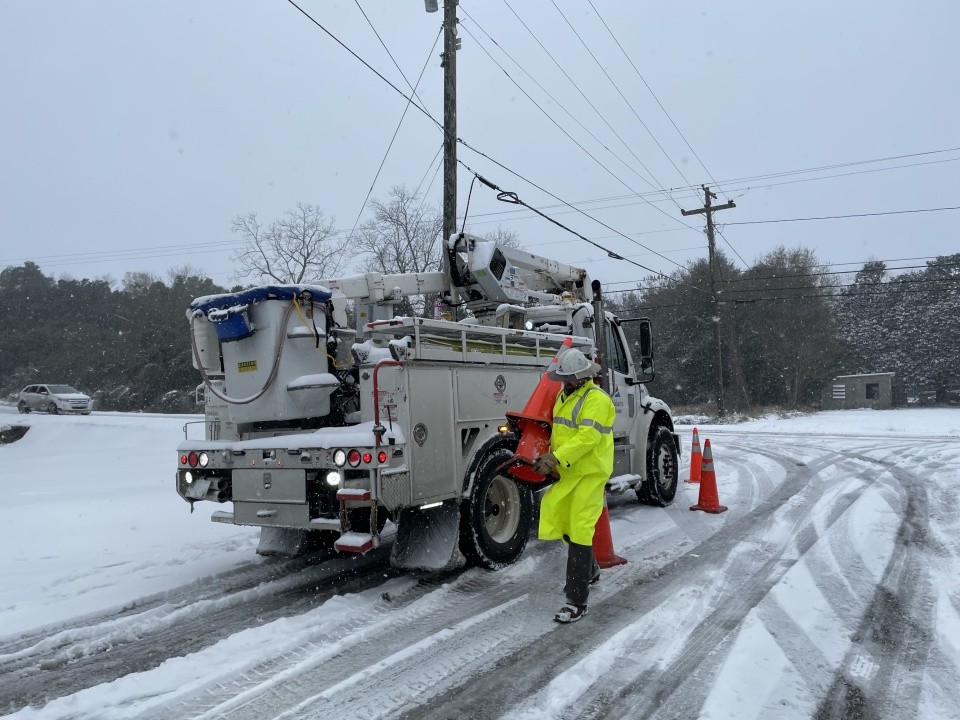
Ice storms bring more than cold temperatures – they create some of the most challenging conditions for the electric system. As freezing rain moves in this weekend, here’s how to stay safe at home, how ice can affect your power, and how our crews respond.
Simple Steps to Stay Safe and Warm at Home
A little preparation before winter weather arrives can help keep your home safer and more comfortable if conditions worsen or power is interrupted.
-
Charge devices: Charge phones, tablets and battery packs ahead of time so you can stay connected.
-
Set your thermostat wisely: Adjust your thermostat to a comfortable, steady temperature before the storm to help maintain warmth if power is lost. In the case of an outage, dress in warm layers and close off unused rooms to conserve heat.
-
Gather emergency lighting: Keep flashlights and extra batteries in easy-to-find places. To reduce fire risk, avoid using candles when possible.
-
Check supplies: Have blankets, warm clothing, two to three days of shelf-stable food, bottled water and any essential medications on hand.
-
Know how to report an outage: Make sure you know how to report outages or downed power lines here, through our mobile app, or by calling 1-800-888-2726.
-
Clear outdoor hazards: Secure loose items outside and park vehicles away from trees or power lines when possible.
-
Plan for safe heating: If you use alternative heat sources, ensure they are designed for indoor use and have proper ventilation. Never use grills, generators or fuel-burning heaters indoors.
-
Avoid travel unless absolutely necessary: Roads may be slick and hazardous.
-
Stay away from downed lines: Always assume downed power lines are energized. Be sure to stay far away and report them immediately at 1-800-888-2726.
How Ice Storms Can Affect Your Power
Ice adds significant weight to trees, power lines and equipment. When branches become heavy with ice, they can snap and fall onto lines. In Alabama, trees cover about 70% of the state’s land area, making outages caused by falling trees very likely during ice storms. Wind combined with ice can also make lines sway or snap, even after the storm has passed.
Ice storms can also impact how quickly power can be restored:
-
Roads and work areas become icy, slowing crews and making repairs more dangerous.
-
Bucket trucks and equipment can’t always operate safely on ice, especially on hills or soft ground.
-
Crews may need to wait for ice to melt before making permanent repairs.
-
Access to damaged areas can be limited by blocked or slippery roads.
Working through the Storm
We prepare for winter weather well before storms arrive. Crews inspect equipment, stage materials and prepare bucket trucks, line trucks and support vehicles to roll out. During an ice storm, damage assessors, lineworkers, dispatchers and fleet teams work together to restore power safely and efficiently. While icy roads and dangerous conditions can slow restoration efforts, safety – for both crews and the public – always comes first.
Ice storms are unpredictable, but preparation makes a difference. While we work around the clock to keep power flowing, staying informed and taking safety precautions can help you weather the storm with confidence.
Check the outage map, report an outage, and follow along for more safety tips and information at @AlabamaPower on Facebook, Instagram and Twitter.