
Data Center Facts for Alabama Communities
Quick Reference for Community Leaders
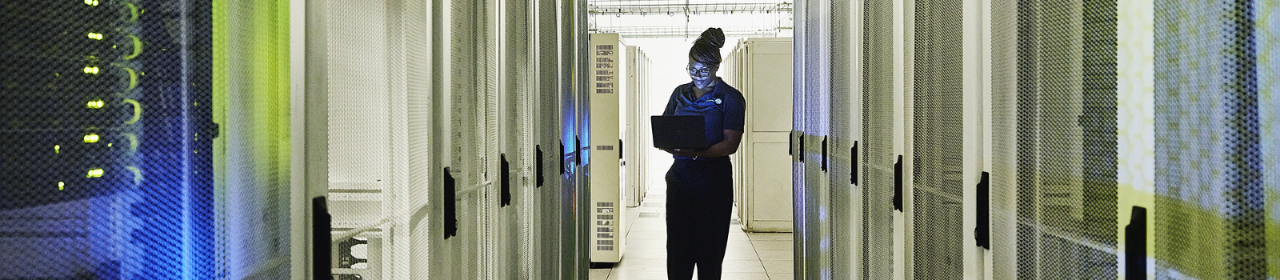
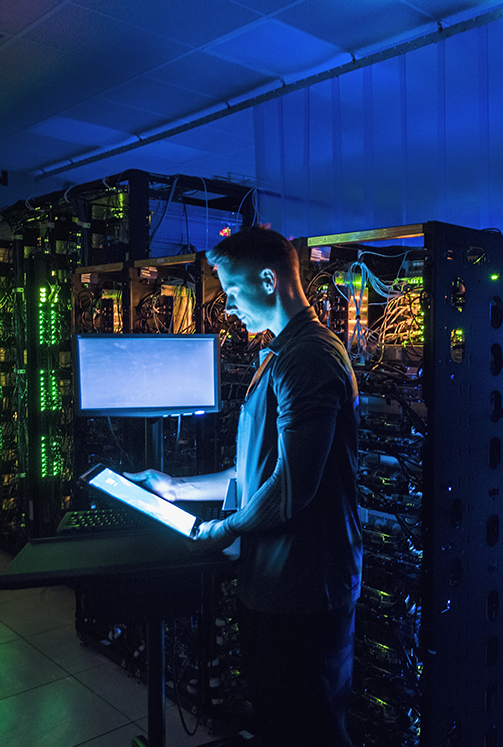
A data center is a secure building filled with computer servers – the machines that store and move the information daily life runs on. When a paycheck lands by direct deposit, a debit card works at the gas pump, a doctor pulls up a patient's chart or a severe-weather alert reaches your phone, a data center somewhere makes it happen. Without them, none of that works.
They also come in different types: banks, hospitals and government agencies run their own; many businesses share space in larger facilities; and the biggest data centers support cloud computing, streaming, and – increasingly – artificial intelligence. The newest projects draw the headlines, but most of what data centers do is provide the everyday digital backbone Alabama families and businesses already rely on.
Data centers also raise fair questions. They use a lot of electricity, and communities ask about bills, reliability, water, noise, traffic and what it means for the neighborhood. Those questions deserve straight answers from credible sources.
Below covers the most common questions and provides factual responses based on publicly available information. Every answer can be independently verified using the sources listed at the end.
Where contract terms are described, they reflect Alabama Power's practices; utilities across the country set their own terms, but the questions local leaders should ask are the same everywhere.
Common Questions and Straight Answers
Are data centers going to raise our electric rates?
No. Alabama Power requires data centers to pay the full cost to serve their energy needs, so costs are not shifted to existing customers. The Alabama Legislature also wrote that standard into state law in 2026. On top of that, data center agreements include minimum bills and minimum term lengths – so, if a project scales back or leaves, families and small businesses aren’t left covering the tab.
How much water do data centers use?
Water use depends on the facility’s cooling system. Some data centers use closed-loop systems that recirculate water. Others use air-cooled systems that require little or no water for cooling. Local leaders will review what cooling system is proposed, how much water it will use, and whether local water infrastructure upgrades are needed to support the project.
What about the electric grid – will it impact our service reliability?
A data center does not connect to the grid until engineering studies are complete and the required upgrades are planned or built. Those studies determine what infrastructure is needed to serve the project safely and reliably. Alabama Power requires data centers to pay for their own infrastructure improvements, which can make the grid even more reliable at no additional cost to other customers.
Do data centers get tax breaks? If so, does that mean our community won’t benefit?
Data centers pay taxes – and Alabama law protects school taxes in full. That can mean millions per year for local schools, per project, without raising anyone's tax rate. Some projects receive incentives on other taxes, and local leaders review those numbers before approving anything.
How many jobs do data centers actually create?
Data centers create construction work, supplier work, local service contracts and tax-base growth. Census data shows Alabama’s share of data center employment doubled from 2016 to 2023. Brookings found that counties receiving their first large data center saw private employment rise 4% to 5% over five to six years, with construction employment up 11% and information-sector employment up 22%. The direct job count is only one part of the local impact.
How much noise do data centers make?
Not all data centers sound the same – the cooling design largely sets the noise profile. Liquid-cooled facilities run quieter, while air-cooled designs with large fan walls can run louder. What neighbors actually hear is controlled in permitting: local agreements can require a sound study before approval, enforceable decibel limits at the property line with stricter nighttime caps, sound walls and low-noise equipment, and follow-up testing after the facility opens. Fairfax County, VA requires noise studies both before and after construction, plus sound barriers around equipment; Columbiana, AL's 2026 ordinance caps future data centers at 67 decibels by day and 57 at night and on weekends. For scale: normal conversation is about 60 decibels; a gas lawnmower runs about 90.
Do data centers emit air pollution?
Data centers connected to the electric grid primarily use electricity for normal operations. Air-emissions questions usually focus on backup generators or other onsite power equipment. Those sources must meet local, state and federal requirements, including local zoning or development conditions, Alabama Department of Environmental Management air-permitting requirements and federal Clean Air Act standards.
Will it increase traffic on our roads over time?
The two phases look different. During construction – typically one to three years – truck and worker traffic will increase. Local leaders may require a traffic study up front, designated truck routes, off-peak hauling schedules and road-repair agreements before approval. Once open, a data center is one of the lightest long-term traffic generators of any large development: a small workforce arriving in shifts around the clock, periodic equipment deliveries and no customer or visitor traffic. Institute of Transportation Engineers data shows a data center generates a fraction of the daily vehicle trips of a warehouse or distribution center of the same size.
What will the data center look like?
What it looks like is decided in permitting – before anything is built. Most data centers are one to two stories tall. Local leaders can set height limits, setbacks from homes, landscape buffers, building and screening standards and outdoor-lighting rules, including dark-sky lighting standards.
What happens if the data center shuts down?
Alabama Power’s data center agreements include minimum bills and minimum term lengths, so families and small businesses are protected if a project changes course. Also, unlike single-purpose manufacturing facilities, data center buildings can be adapted for new technology or new tenants.
Do all data centers come with a solar farm?
Some data center customers choose to buy renewable energy to meet their own corporate goals. That is a customer choice, not a requirement for every data center. Under Alabama Power’s Renewable Subscription Program, the data center customer covers the cost of that renewable project, not other customers. State regulators review the terms of the contract; the project developer is responsible for siting, permitting and working closely with members of the local community.
Will foreign companies control our data if we don’t build data centers in the U.S.?
Keeping Americans' data on American soil is one of the strongest reasons to build data centers here. Information stored in U.S. facilities sits under U.S. law – not a foreign government's. The facilities themselves house computing equipment; the companies that own the data – healthcare providers, banks, government agencies – choose where to store it based on security and legal requirements. The federal government also reviews foreign investment through established national security processes, including restrictions on transferring Americans' personal data to foreign adversaries.
Sources
All responses above are based on publicly available information from the following sources.
- Alabama Power – “Data Centers and Bills”
- Alabama State Legislature – “Senate Bill 270"
- Alabama Department of Revenue – “Authorization for Abatement – Chapter 9B”
- U.S. Census Bureau – “Data Centers Growing Fast and Reshaping Local Economies”
- Brookings Institution – “New Evidence on Data Center Employment Effects”
- Fairfax County, VA – “Board of Supervisors Approves New Data Center Zoning Ordinance Amendment”
- City of Columbiana, AL – “Chapter 18.47 - Data Centers”
- Commercial Acoustics – “Decibel Level Chart: How Loud Are Common Sounds?”
- Alabama Department of Environmental Management – “Air Permitting”
- U.S. Environmental Protection Agency – “Clean Air Act Resources for Data Centers”
- Wells + Associates – “Data Centers and Traffic: It’s Not Just About Volume, But Site Access and Meeting Local Standards”
- Dark Sky – “Five Principles for Responsible Outdoor Lighting”
- Alabama Power – “Clean Energy Solutions for Businesses”
- U.S. Department of Justice – “Justice Department Implements Critical National Security Program to Protect Americans’ Sensitive Data from Foreign Adversaries”