Skip to main content.
House

A Winter Energy Guide for Your Home

That’s what we’re here to help with.

Even with rates frozen through 2027, how much energy you use can still affect your bill. We’ve got the tools, tips and resources to help you understand your usage, manage costs and stay prepared for whatever winter brings.

Before the Temperatures Drop

When colder weather rolls in, a few simple steps can help keep your home comfortable and your heating system running efficiently. Here are some easy ways to make a difference before temperatures drop.

Keep the cold air out. Check windows and doors for drafts. Weatherstripping and caulk can help seal gaps that let warm air escape.

Give your heating system a little attention. Replace dirty air filters and consider scheduling a seasonal tuneup to help your system run efficiently.

Protect your pipes. Insulate exposed pipes to help your hot water heater and remember to disconnect outdoor hoses before freezing temperatures arrive. 

Make room for warmth. Check and make sure your furniture, curtains and rugs aren't blocking heating vents or registers.
Family

Saving Through the Season

When it comes to saving energy at home, knowledge is power. When you know how much energy you’re using, when and how, you can be more aware of opportunities to cut back. Our free tools make it easier to track your usage, see how weather affects your energy needs and make informed decisions throughout the season.

MPU

My Power Usage

Track your daily energy use and receive daily and monthly alerts to meet your goals.

eHERs

Home Energy Reports

Get personalized insights and energy-saving tips based on your home’s energy habits.

Piggy Bank icon

Bill Companion

Find tools, programs and resources to help you manage your bill and lower energy costs.

TempCheck

Cold winter temperatures can make your HVAC system work harder, especially when there’s a big difference between the outdoor temperature and your thermostat setting. Our tool shows how those factors work together, helping you find a comfortable setting that can also help reduce energy use. 

Please note: this tool is for educational purposes only. It shows the relationship between temperature and energy demand, but it is not a billing calculator and does not account for your home's size, insulation, equipment efficiency or usage habits. Tier thresholds are based on ASHRAE balance point research. Results will vary by home.
Outside Temp
100°
80°
60°
40°
20°
0°
-20°
drag to adjust
Energy Usage
—°F
temp difference
LOW
MOD
HIGH
EXTREME
0°F 15°F 25°F 45°F+
ⓘ The scale changes in the summer because humidity in Alabama makes your system work much harder than the temperature gap alone would suggest.
Inside Temp
70°
—
Slide to adjust
heat cool graphic

Why Bills Can Rise in Winter

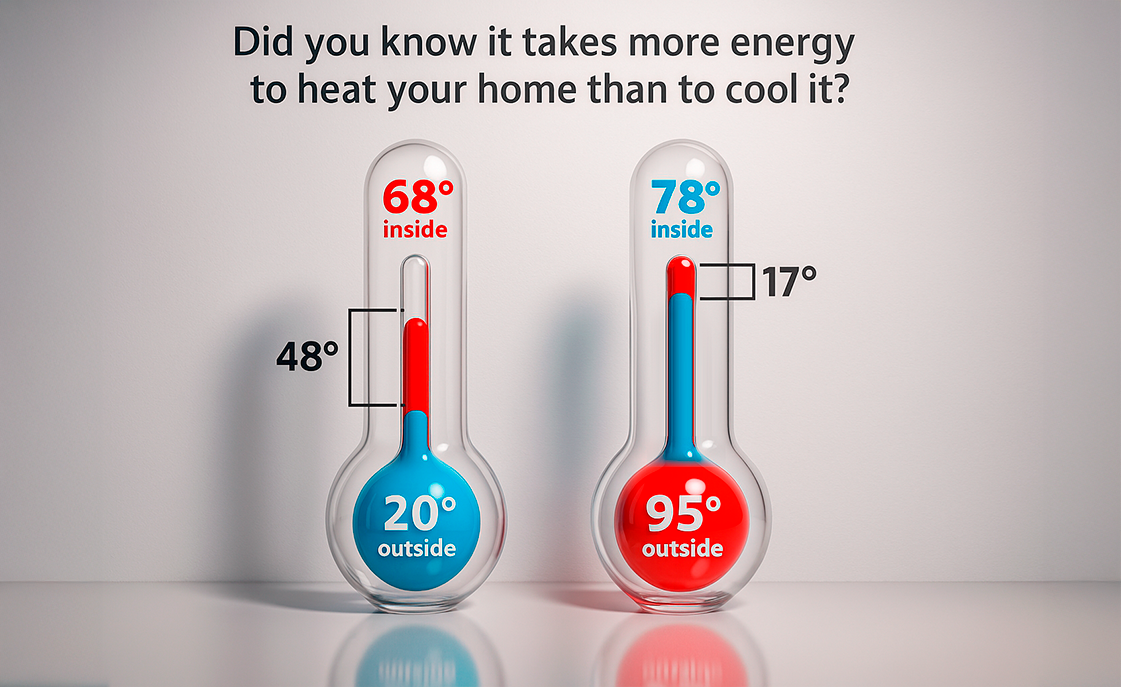
When it’s cold outside, your heating system has to work harder to make up the difference between outdoor and indoor temperatures.

For example, heating your home from 40°F outside to 70°F inside means a 30-degree difference, while cooling it from 85°F to 72°F in summer is only a 13-degree difference.

That bigger gap means your system may run longer and use more energy to keep you comfortable.


When Winter Weather Rolls In

Snow and ice may be rare in Alabama, but it’s always good to know what to expect when winter weather heads our way. Explore our helpful resources to keep you and your family prepared.


Need Support This Winter?

If you need help managing your monthly power bill, there are a number of flexible options and support programs to help you.

Mobile app

Stay Connected

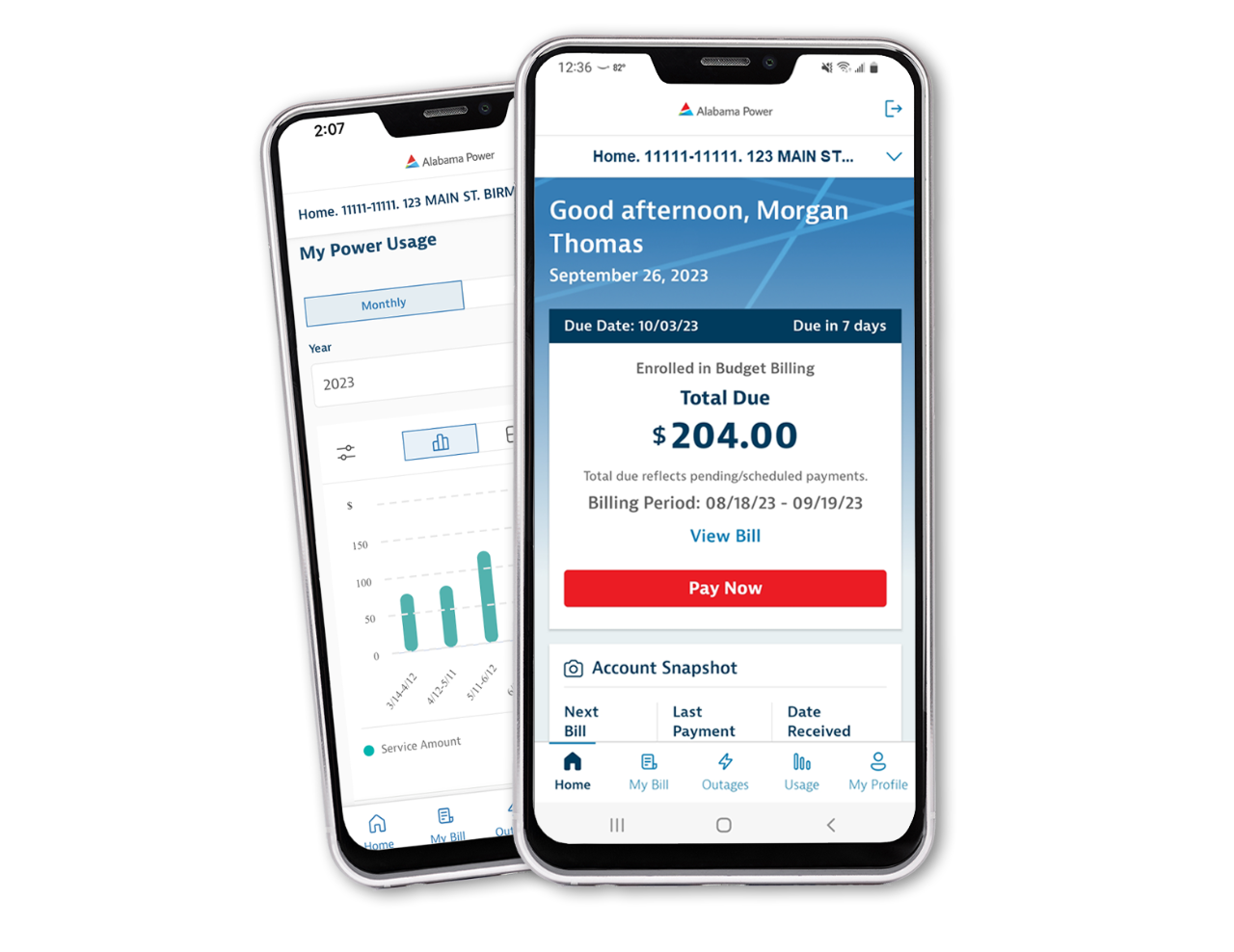
Monitor usage, pay bills and report outages with the Alabama Power Mobile App.

Scam

Beware of Scams

Scams are more prevalent during the holiday season. Read about what to look out for and how to stay aware.

When in doubt, please call us directly at 1-800-245-2244.